
The Treasurer's Crystal Ball

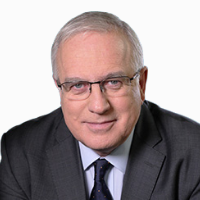



[Music]
Hello, I'm Alan Kohler, Editor-at-Large of Intelligent Investor and Finance Presenter, Columnist and Podcaster for the ABC.
SM: And I'm Stephen Mayne, contributor at Intelligent Investor, Founder of Crikey and shareholder activist, and this is The Money Café, Alan, with a special guest later on.
That's right and it's the only guest we have on Money Café, Jim Chalmers, the Treasurer. I keep getting these requests from people to come on Money Café and I have to say to them, "Sorry, we don't have guests, it's just us..." except when we occasionally get the Treasurer.
SM: Well, twice now. Intergenerational Report's a pretty big thing, so I think it was worthwhile, it was a good chat.
That's right and he's going to join us from a café in his electorate, so it's all cafés.
SM: Getting into the spirit of things, isn't he?
That's right but we have not got a picture of him doing that, it's just audio, but you can hear the Logan café, the name of which I forget, but certainly you can hear it in the background - anyway, we'll get there. A couple of things for us to talk about before we move to the Intergenerational Report and Jim Chalmers. Interest rates next week, Stephen, are going to go up for sure, right? It looks that way.
SM: I was watching it on the news last night, all four big banks are now saying, "Up they go to 4.6..." and a 92 per cent chance and likelihood of another two after that and official interest rates get above 5 per cent for the first time since pre-GFC. This is pretty brutal and it's a global trend because inflation is out of control - well, not out of control, inflation is too high.
Inflation's too high, they can't get it down, they've got to slow the economy down and hammer everybody with higher interest rates to get the inflation down. That looks like it's going to happen, for sure. I just think this is terrible, it's terrible. Real disposable incomes are already flat to declining, people are already in strife, but mind you, you go out to a restaurant these days and it's full all the time, they're always full. It's amazing. I don't know - what do you think, Stephen?
SM: I don't want to sound too gloomy, but could this be a recession? Particularly if we suddenly get a big crunch in immigration and we've got sentiment around house prices and rising interest rates. It's going to hurt a lot of people.
I agree.
SM: If they do three rises - I guess they're trying to get inflation down and there was a bit of an uptick in unemployment, but I thought we were done and the next move was going to be down. I was on a call with Geoff Wilson's Wilson Asset Management and a couple of their fund managers were on yesterday and they were saying, "Everything was going great until Melbourne Cup Day last year when we had that really unexpected inflation and then we all of a sudden had interest rates on the rise and it's been terrible since then..." The cycle will turn hopefully, but it's the most negative thing in the economy, is rising interest rates and the fact we thought we'd reached the top and now up we go again, it's very gloomy and if you've got a big mortgage, it's a cash flow crunch, isn't it?
It is, that's right and that's what the Reserve Bank is trying to achieve, a cash flow crunch. They're trying to make sure that everyone has a cash flow crunch and that's what's going to happen, so...
SM: Meanwhile, internationally - geez, it's hard to keep up with all the action in New York. United Nations, Trump's there and everyone's meeting with everyone, Trump with Burnham, Steve Witkoff with the Iranian Foreign Minister, Trump with Zelensky... Then tomorrow, we've got Trump and Xi, the big two are having a big session tomorrow and there'll be a lot of movement and stuff, but will they do anything meaningful? Will they say, "Let's fix AI"? What's our long-term plan with chips and tariffs and rare earths? Because there's a whole lot of sort of temporary détente. Could they allow EVs into America?
Because the Chinese are taking over the world with EVs but they're banned in America, so lots that could be discussed and could be hammered out between Xi and Trump tomorrow, instead you've just got this massive power play dinner where all the tech bros, all the billionaires will be sitting with Trump, just like how he took all of them to Beijing in May and it'll be a show of, "Look at my big mates, look at my oligarch mates!" and Xi will have his big team and sadly, I suspect it'll be all show and not a lot of actual real decisions. They could be sorting out Iran. I don't know, what do you make of it all?
I agree, I think that there won't be much coming out of it. America and China are far too adversarial, they're basically in a contest. I can't see any of these things being dealt with properly, Iran, AI, all this stuff I don't think is going to be fixed. But that just might be me being gloomy, as usual. I don't know, I can't see it. I'd love to be proved wrong, but I don't think it's going to basically do much at all. How are you going with the AGMs?
SM: AGMs - I have to say, in the last week, I've had more success than ever in terms of lodging a nomination for a board and then negotiating a withdrawal. A number of companies have agreed to introduce an online questions element to their previously dinosaur physical AGMs - and I'm not going to name them because my little standover racket would make them look weak. But quite a number of major companies have done this, so I'm lobbing nominations left, right and centre to anyone that's doing a big dinosaur meeting and sadly, BHP were the most recalcitrant so I'm actually running for their board. I didn't want to... I nominated and I said, "Come on, BHP! You're running a dinosaur physical meeting, you haven't even got a webcast of last year's meeting up. Come on, you're the biggest company, just get with the program!" "Nope, we refuse, we'd rather have you run for the board."
So the notice of meeting has come out and they're having it at Sydney Olympic Park, they've done a Gerry Harvey and they're going out to Olympic Park in Sydney. These companies, they try to make it difficult for people to attend, so they won't get many people there. That's all I've been doing on the AGM front, but I've been very pleased with the amount of agreement I've been getting from companies to actually - we've already got the world's best hybrid AGMs, no other country has as many as we do and quite a few of the recalcitrants are rolling over, particularly a few Perth mining companies who are in the world's most isolated city, they're no longer going to say, "You've got to fly to Perth to come to our AGM." That's progress.
You can take credit for that, can't you, Stephen, all the hybrid AGMs?
SM: No, no, COVID introduced online AGMs and the best companies stuck with it. So they brought back physicals and those who wanted to avoid scrutiny and be dinosaurs then went back to physical only, but the best companies and most of the big companies are running hybrids. Now it's just a case of beating the recalcitrants into submission and the old board tilt - who wants a board tilt from some nutter running for your board? So they'd rather do an online AGM than have a board tilt, which is great.
Then I've just got to engage with the company at the AGM, ask them about the capital raising that ripped off retail or whatever it might be. But, no good - you can't engage with a company that runs a physical meeting in Perth, it's just impossible, so that's a small bit of progress. Anyway, we probably should get on with our Treasurer, is he waiting for us in a café in Logan, is he?
Yeah, let's go to the Treasurer. Jim, thanks for joining us this morning, where are you? You're in a café in Logan, I think.
JC: I am, Alan. Thanks for the chance to come back on The Money Café, I'm taking the theme very seriously, this is St Coco Café in a beautiful part of my local electorate called Daisy Hill, in between Brisbane and the Gold Coast. A nice cup of coffee early on Wednesday morning in Logan City.
You've had a big couple of days, in fact I think you got home pretty late last night...
JC: Got home this morning, technically.
This morning, there you go.
JC: Yeah, yesterday I was in Canberra, Sydney and Brisbane, gave a speech for the Financial Review and got home about 12:30 this morning.
You've had a couple of days of marketing the Intergenerational Report and it seems to me, just reading all the transcripts and that, you've just basically been asked about, firstly, the productivity assumptions of 1.2 per cent forever and migration which I'm not sure even was in there, anyway, it is in there but it's not a big part of it. Firstly, your defence of the 1.2 per cent productivity growth, the productivity went backwards in the last 12 months so what's the basis of you and the Treasury predicting this massive bounce back in productivity growth?
JC: First of all, you're right, there's been a lot of focus on migration and on the productivity assumption, also probably artificial intelligence has been the other area that people have been really interested in, I think in welcome ways. The Intergenerational Report is about a future which is full of risks, full of pressures on the budget, but also full of opportunities. When it comes to the productivity assumption, you'd remember, Alan, when we came to office about four years ago we took that assumption down. It was at 1.5 per cent, we took it down to 1.2 on Treasury advice to make it more realistic and we stuck to that assumption for a couple of reasons. One reason is if you look at the assumptions that some of our peer economies use - the UK, I think is at 1.5; the US, at 1.4; New Zealand is at 0.9...
So we're sort of roughly in the middle range on the productivity assumption and also, if you look through the IGR and I'm sure you have, you can see that there's actually a range of possibilities, not just below that 1.2, but also above it and a lot of it hinges on a lot of the work that we're doing to make the economy more productive in areas like getting compliance costs down, attracting more investment, making approvals faster, but also the AI story as well, which will be a game-changer in our economy for all the reasons that you're familiar with.
Yeah, but the 1.2 per cent, you reduced it from 1.5 to 1.2 per cent in 2022, fair enough, but since then it's been zero. You're completely wrong and now you're basing 40 years of forecasts on productivity growth assumptions that have been wrong and are likely to be wrong again.
JC: Well, a couple of things about that... First of all, you're right to say that there's been a productivity problem in our economy, but it hasn't been the last 12 months or even the last few years, it's been the last couple of decades. We've been upfront about that, that's why the budget has got the biggest and broadest productivity package of any budget in recent decades, because we acknowledge productivity growth has been too slow. But also at the same time and I think also implicit in your question, is that this is a long-term assumption. It's not supposed to follow the quarterly data, it's a long-term assumption, it's different to the Reserve Bank in that regard.
Some people have wanted to compare the Reserve Bank forecast with the Treasury assumption, but as the Governor of the Reserve Bank said this week, it's not comparing like with like. So to bring all of that together, Alan, the Treasury advice on the 1.2 reflects being roughly in the middle of the pack around the world, it relies on a whole bunch of analysis of what's happening in the global productivity scene, as well as the developments we've seen in the last couple of decades, which we acknowledge have been too weak to deliver the higher living standards and decent real wages that we want to see in our economy. So we're not just acknowledging that, we're doing something about it, it will take time to turn around a couple of decades of sub-par productivity growth.
SM: Treasurer, can I just jump in on AI? Take us through your journey as to when you had your epiphany on AI, because I think it wasn't that big a feature in the last election campaign, it wasn't that big a feature in the Productivity Roundtable. People were underwhelmed initially with Tim Ayres' opening statement last December and now all of a sudden, it has a whole chapter in the IGR. Was it when you met Dario Amodei in March, when he was visiting? Was it the whole capex boom? Was it the 20-plus data centres that you saw coming through in the growth figures as the shining light in capital investment? Take us through your journey, because I was amazed that you and Treasury did a whole chapter - one of the opening chapters - on AI, why was that?
JC: I think it's all of those things, but particularly I think that capex boom that you refer to, I mean it's been absolutely extraordinary. One of the numbers in the IGR has investment in data infrastructure reaching something like 5 per cent of GDP, so an absolutely astronomical boom in investment, that's been part of it. Even 12 months ago, we were getting a lot of people meeting with us about their investment intentions, that obviously piqued our interest. You're right that probably the main difference between the IGR in 2023 and the IGR in 2026 has been that AI has become front and centre.
I'm not sure about one particular epiphany. Obviously, meeting with Anthropic, part of that, but mostly this huge investment boom and really, what that compels us to do is to make sure that all this investment is in our national interest, that we capture the upside of AI and maximise the opportunities at the same time as we minimise the quite considerable risks. That's why what the PM signed Australia up to during the course of this week in the US around those global guardrails is so important, the national standards around data centres are really important, the work we're doing on copyright and creatives. In some of these respects, we're actually leading the world in the way that we're thinking about minimising these risks of AI so that we can properly capture the upside opportunity.
To what extent does AI underpin the 1.2 per cent productivity forecast? Is that all about AI?
JC: No, it makes a contribution, but it's not doing all the heavy lifting. The best way to think about that is to use the Productivity Commission's work, I think about a sixth of the 1.2 assumption broadly, rule of thumb, is from AI. So making a meaningful contribution, obviously a game-changer in the economy more broadly, but not the only story when it comes to hitting those productivity growth assumptions.
Reading the chapter on AI in the IGR, it seems to me to sum up by saying, "This is a very, very big deal, there's tons of risks, we actually don't know what's going to happen with it, but it'll be fine, don't worry!" I don't know...
JC: You had me until the end, Alan...
No, but that's what it says, that's the whole point of it.
JC: It does say this is a big deal, it does say that there are a heap of risks, but it does not say that we will just let it rip and hope for the best, it doesn't say that. It says over and over again that our effort has to go into minimising, managing these considerable risks and in the speech I gave at the ANU to launch the Intergenerational Report, I went to some lengths to say, "We'll only capture the opportunity if we take seriously the legitimate concerns that people have about natural resource management, about copyright and creatives, about the labour market..." You and I have talked about - I think you were good enough to put a cover endorsement on the book I wrote about this almost a decade ago with Mike Quigley.
Our goal here is to make sure that Australians are beneficiaries, are not victims, of all of this accelerating change that we're seeing in our economy and Stephen's right to point out that the big mover between the last IGR and this one is the way that AI has become front and centre. It's a big part of the work of a whole heap of cabinet ministers, not just letting it rip and hoping for the best, but taking very seriously the risks that people legitimately have about a transformative technology which will touch every part of our economy and every part of our society in the years and decades to come.
What do you think of the proposition that it's going to kill us all? And on that score, I'd just say that Elon Musk and a few people have said, "Oh, there's a 10 per cent chance of it killing us all," right? The interviewer who was talking to Elon Musk said, "Would you get on one of your rockets if you knew that there was a 10 per cent chance that it would blow up and kill you?" And he came up with a very interesting answer, he said, "We're already on the rocket, it's too late. It's already happening." So what do you think of that?
JC: I haven't seen that interview, but I do know that people who know what they're talking about have pointed to some quite serious risks around AI, we take those warnings very seriously. Again, whether it's the PM's work on the international stage around global guardrails, whether it's our work as well... That global guardrail piece of work is around independent evaluations, safety standards, security, all of these sorts of things, so that we can come at these warnings, even if they're not the central case, we have to take them seriously and we are.
SM: A question from James Thomson, who was at your speech last night in Sydney, he makes the point that the IGR makes clear that the tax burden on working-age people is going to increase and Alan, I think on the news last night, was talking about the time in 2005-06 when it was 9 per cent and now it's going to go from 12 per cent to 14 per cent over the next four years. James's question is, "Is this really practical, or will we have to think more about the balance between taxing labour and wealth?"
JC: Well, we already are thinking differently about that. James would have noticed in the budget in May, we're trying to strike a better balance between taxes on people who get their income from wages or from other legitimate ways, the income from assets - that's obviously been controversial and contested in ways that we expected. But really, whether it's tax reform, cutting taxes for workers, rebalancing the system, a better, fairer alignment between the different types of taxes or what we're doing to make it easier for people to buy their first home, the IGR really is in lots of ways a justification for some of that difficult reform that we've taken on which will have an intergenerational dividend.
And so, if you think about that number that you're right to point to, Stephen, or James is right to point to and Alan last night on the TV, it is the case that as our population ages, fertility drops further and faster than we anticipated even three years ago, there is a risk that disproportionately fewer workers carry a heavier share of the tax burden, that's why I'm cutting income taxes five times in three different ways, using three different mechanisms. If we weren't doing that - this is in the IGR as well - that number you refer to would be 2 percentage points worse. So we are making a difference, but we recognise the tax base at the same time and that's really part of the motivation, certainly the intergenerational motivation for some of the difficult stuff that we took on in May.
SM: How do you feel about the fact that we're already a relatively high-tax country, there is this rise from 12 to 14 per cent, we've got the world's greatest dowry of resources and yet, there's 40 years of deficits and we're starting with a trillion dollars in debt. Shouldn't we be the richest country in the world and how is it that we can't ever run a surplus over four decades? Does that trouble you as a Treasurer, that there's not a single surplus forecast in there?
JC: Of course, these budget pressures are a big part of the focus of my work. I'm the only Treasurer in the last decade and a half to hand down a couple of surpluses and obviously, the closer you can get to the balance, the better, obviously. But if you want to talk about those international comparisons and how we're faring in the world, the fiscal story in Australia is so much stronger than what we see in other countries. Our debt is a tiny sliver of what we see in other countries.
Our fiscal position more broadly, our cash balance, compare us with the world and there wouldn't be too many countries who wouldn't want to swap places with us, particularly at a time when we've got these rising bond yields putting quite extreme pressure on borrowing costs as cheaper debt has to be refinanced for more expensive debt because of what's happening in the Middle East pushing up borrowing costs and the competition from the hyperscalers. For all of these reasons, Stephen, we don't dismiss, of course, the very serious pressures on the budget, those pressures intensify as our population ages, but we're doing much better than the rest of the world.
It gives me the opportunity as well, Stephen - you'd understand this and Alan would too, but one of the big things missed from the coverage of the IGR, one of the most important things, is the absolute miracle of superannuation means that as more and more people are retired, more and more people are actually seeing their retirement incomes go up. The call on the budget from pensions is actually going down and in other countries that's not happening. In other countries, you're seeing the exploding pension liabilities over the longer term because they don't have our advantage when it comes to superannuation.
What we can say, compare us to the world, or what we can say about our own budget, is more people retiring with more money at the same time as the pension bill in Australia as a share of our economy goes down, not up; and that is quite an extraordinary advantage that we have. Again, it keeps bringing me back to this overall sense from the IGR, of course the pressures are intensifying, of course the world is a dangerous place, the global economy is more volatile, less predictable than it has been probably in my lifetime, but we have really quite considerable national advantages too and superannuation is one of them.
Yeah, but I reckon Stephen's right, you're looking at 40 years of deficits, why don't you tax our resources more? It just seems obvious to me and a lot of people that if we've got 40 years of deficits ahead of us, we need to tax resources more, in particular gas. David Pocock and all these other people are calling for more of a tax...
SM: They did try that with the resource super profits tax and a big reaction...
I mean, come on! Surely you can get that going again, the resources taxes that were tried and failed previously? I don't know why you don't do that.
JC: A couple of things about that. First of all, I did reform the PRRT, I know that people would like us to go further than the reforms we did a couple of years ago, but those reforms do mean that more entities are paying PRRT and the PRRT take was written up in the most recent budget. I do understand, I'm not dismissing the fact that people would like us to do more than that. The second point is obviously at a time when there's a premium on fuel security for obvious reasons, we have prioritised our international agreements as part of our efforts to secure liquid fuels. Part of that is making sure that we have a good, secure relationship with the buyers of our gas.
Then the last point is we actually have got a really big reform underway in the gas market which is about gas reservation, which is about fuel security for Australia, better prices for our local manufacturers and others. And so, we are reforming the gas market, not along the lines that you are proposing, Alan, or that others have proposed, but we've taken some steps, that's making a bit of a difference, we know that people would like us to go further, but the focus for us is on the international relationships and on gas reservation, which I think is going to be a really important reform.
SM: Last one from me, Treasurer. Would you agree the IGR is one of Peter Costello's better reforms? I think probably independent Reserve Bank would be the Future Fund and this one, but one way it could be improved possibly, would be opening up the data and the assumptions for other people to be able to scenario play with all the assumptions. It's a bit of a closed book, this is Treasury's view... And I have heard some criticisms that it could be more independent, like some of the talking points in the IGR are a bit similar to some of the Government's talking points and if somehow future ones could be slightly more independent and slightly more open data...
I love the report, it shouldn't be 24-hour news cycle, it should be referred to all the time, it's a great thing you're doing and it's good to see you getting behind it, but in terms of improving the IGR in future, what do you think about maybe having a couple of independent economists or academics working on it as well and what about more of an open data approach, so that others can then scenario play with it?
JC: First of all, I am a big supporter of the IGR and I have paid tribute before and pay tribute again to Peter Costello for beginning it. This is the seventh one, Peter and I are the only two who have delivered a couple of them, so far. But I do think it's a really worthwhile piece of work. One of the reasons I don't quite share your view about the nature of the language in the IGR, I think one of the reasons why there's such a synergy between the conclusions in the IGR and the Government's agenda is because we take our intergenerational obligations very seriously and there's a lot of justification for the Government's reforms in the document. I don't think that the way we're doing it is preventing people from having very strong views, whether it's about the assumptions that underpin the IGR or the conclusions drawn by the IGR. I think it has stirred up from my point of view, a very welcome debate about the future of our economy. I like it when people say that there's too much or too little emphasis here or there, or they would do things differently... I see that only as a good thing, that people are reacting to it. I'm not quite sure about how we would open it up for people to interact differently, but I don't feel like their interactions have been limited, in the last few days it's been very willing and that's a good thing.
The last thing I'd say about that is because I support the IGR, because I think it's a really useful thing for Australia to engage in, if people have got good ideas about how we make it better next time, whether it's me handing it down or some other Treasurer, obviously we're open to ideas on how to make it better, we want people to see it as we do, which is a really important way to get our head around the big shifts and shocks as Martin Wolf would call it, coming at us in the coming decades so that we can plan accordingly - and not at the expense of dealing with the here and now, cost of living pressures that people are under, the challenges in the global environment...
Obviously, that's the Government's priority and focus, but that doesn't prevent us from trying to sketch out for people, how we think this rolls out. The further out you go, of course there's more uncertainty, that's always been the case with long-term forecasts. But it's a really useful exercise, if there are ideas that people have about making it better in three years' time, then obviously we'd be open to them.
Last one from me too, Treasurer, you did a really interesting speech last night at the Financial Review's power dinner about their power issue and you talked about how power is more ephemeral now and it's dissipating more quickly, but you also referred to the disruptive politics of grievance and you were quoting Andrew Cornell, but it sounded like you were kind of on board with it - and obviously we're talking to some extent about One Nation and the rise of One Nation as a force in Australia, particularly over the last few years. They are obviously the party of grievance, so the question I suppose is to what extent do you take responsibility for the rise of One Nation, the Government, and the rise of grievance, in particular in relation to immigration? Because it got out of control after the pandemic, right?
There was this huge burst of immigration. Now you're talking about bringing immigration down to 225,000 in two years, which is firstly, all you're doing is actually turning the previous forecast of Treasury in the budget that you brought down this year and last year, so it was last year's budget as well, another forecast of 225,000. So all you're doing is really just saying, "Okay, we're going to do what we said we were forecasting almost two years ago..." and anyway, that 225,000 is roughly what it used to be before the pandemic for years.
I suppose it's a two-part question. Do you take responsibility, in part, for the grievance that now people feel and do you think you're doing enough to deal with that grievance?
JC: There is a lot in that question, Alan, let me try and do it all justice. First of all, we do know that levels of migration are a concern for people, again we don't lightly dismiss that, from time to time people raise legitimate concerns about that. You're also right to say that when we came to office it was absolutely galloping after COVID and what we've been able to do, if you look at those migration numbers that came out last week, we've got net overseas migration down almost 50 per cent from those peaks and we're managing it down further again, as you rightly point out, down to more normal levels, which is the 225,000 in the budget.
My view about all of this, whether it's the kind of cartoonish slogans from One Nation on this or indeed from the Liberals and Nationals who are desperately trying to copy One Nation, is our responsibility and we take responsibility for this, is to manage the program down to more normal levels at the same time as we make it clear that migration can be a force for good in our economy and our society, but only if it's well managed, transparently managed, responsibly managed... That's what our reforms are all about. Yes, they are about hitting those Treasury forecasts, but they're also making sure that migration is in our national interest when it comes to the skills mix, that we're getting the builders and care economy workers that we desperately need at the same time as we train Australians for opportunities.
So, of course we take responsibility for the migration system and the way that people think about our migration system, but overwhelmingly throughout our history and into our future, migration has been and will continue to be a force for good. That doesn't mean we let it rip, we manage it very, very, very tightly, down to more normal levels and make sure that it's the best version of the migration system that it can be. But if you look at the Intergenerational Report, it makes it abundantly clear. Fertility rates falling further and faster than anticipated, a population that is ageing relatively quickly, it would be an act of economic self-harm to do the kinds of crazy stuff that's been proposed by our political opponents. It would be damaging to the economy in the near term and absolutely devastating to the economy over the coming decades.
Our responsibility, we're getting the policy right, it is a very tightly run system, will be even more tightly run. We are getting the net overseas migration numbers down at the same time as we make it clear that Australia would be absolutely mad to turn its back on migration, particularly in the context of all of the challenges which are laid bare in the Intergenerational Report.
Well, thanks very much for joining us, Treasurer. What's the name of the café again? We should give them a plug.
JC: This is St Coco at Daisy Hill, Cupania Street at Daisy Hill in Logan City, it's a bit of a favourite for our family, actually, it used to be our Sunday morning ritual when our kids were super-small. It's one of those cafés which is really good for little kids and also lots of puppies around, it's a wonderful place.
Is it walking distance for you?
JC: Not anymore. The old place was. When the kids were first born, we lived around the corner and now we live about another K away, but it's a terrific place. Amber and Cynamon run it, two sisters and they are much loved in our local community, as is their café.
SM: And there weren't too many slogans from Logan this morning, so thanks for coming along!
JC: [Laughs] It's remarkable, Stephen, I've not heard that before. I've heard the other thing that rhymes with Logan, but not that.
SM: [Laughs]
Very good. Well, have a good day marketing your IGR, Treasurer.
JC: Thanks very much, guys, appreciate it.
SM: Thanks, Jim. Well, Alan, what did you make of all that? That was good that he makes himself available, isn't it?
Oh yeah, crikey, he's been available - he's done so much media in the last few days, marketing his IGR, getting on board - but I don't think a particularly notable achievement, to be honest, but anyway... He's okay. It was good. I think the answers were much the same as he's been giving everybody else, but our Money Café audience should get a bit of a go at it too, what do you think?
SM: Yeah, I think so. Your piece on the news, putting up some of those graphs, I thought were good points, long-term deficits, disappointing productivity, disappointing growth, personal income tax grabs too high and how can the richest country in the world never land a surplus? But he came back with the old, "We are in a better position than everyone else..." And I'd say, "Well, we damn well should be if you look at our mining riches..." But yeah, I don't know, it's a good thing it's done, it's good that it's done but I just get frustrated that the outlook isn't more dynamic, better growth, better productivity, surpluses... It just seems a bit more of the same-ish.
I thought it was interesting that the first chapter about the Intergenerational Report was about AI and the first graph in the whole thing was a graph of AI capabilities in various ways, various types of capability, all going above human-level capability and that was the number one graph, number one point in a way, at the top of the IGR. The only thing that is not at a human level is - what was it called again?
SM: Oh, the multi... You did it on the news last night.
And that's the use of a computer screen and using the keyboard and mouse to do something with it. Basically, using a computer screen autonomously is the only thing that hasn't quite achieved human-level capability, but it's the steepest rising line in the graph and it's going to obviously go above human-level capability pretty soon, so that's it, honestly.
SM: They've changed their view... Initially, Labor was influenced by their unions and the whole doomerism about the jobs wipeout. And so, the union sort of view from the Labor Party is we're going to regulate this, we're not happy with it. Then Australia looks like a winner because of all the mining boom, then we join the data centre boom and he said he was particularly activated by the data centre boom because he's finally got some growth coming from a business investment point of view. So, I think he within the Government and Treasury have taken on the more positive lean-in perspective on AI, versus the doomerism...
Because Australia was one of the more sceptical countries overall, there was more scepticism about AI than many other markets and our Government was slow, but they're certainly making up for lost time and an opening chapter in the IGR was a big statement in itself. I think that we're really on it, it's the biggest tech change in our lifetimes and this is how we think it's going to fix it. But if you look at it in 40 years' time, I'm sure that much of what they said won't bear much resemblance to what's happened because it's so fast moving, everything's out of date in about six weeks.
Who knew that Muse, Mark Zuckerberg's personal assistant, was going to send the stock up 11 per cent and become the number one app on the App Store and be banned by Amazon because it was so massively effective at negotiating good purchases for people deploying their personal assistant from Meta to go shopping on Amazon and elsewhere? That was a bit of a moment, wasn't it?
It was, absolutely. We've got a couple of questions on AI and we'll go to questions now, but before we do that, let's have a word from our sponsor.
[Recording]
Starting small doesn't mean thinking small.
InvestSMART WealthBuilder lets you start with $1,000 in a low-fee, professionally managed ETF portfolio with exposure to hundreds of Australian and international companies, spanning global technology, Australian resources and many other industries.
We do the managing, you get on with life. Visit investsmart.com.au to learn more.
Terms and conditions apply. WealthBuilder is a high risk portfolio with a suggested timeframe of seven years or more, please read the PDS and Target Market Determination to determine if this product is right for you.
[End Recording]
SM: Sticking with AI, Alan, we've had some pushback after last week's chat, a lot of people writing in saying we shouldn't be dismissing some of the fear-mongering or concerns. Michael from Bunbury says regarding the comments last week, "Laughing off AI safety concerns and how you don't believe AI has moved the needle in a meaningful way for businesses, it sounds like your AI scepticism is..."
Stephen, this is James, not me.
SM: Yes, that's right. I was trying to protect James, Alan, because he's not here to defend himself. We've had a number of people saying, "James, don't dismiss it, take it more seriously!" And I must admit, I have moved - even just talking to my own kids and looking at these questions, I have certainly moved on the downside perspective. You can't have Dario Amodei and Sam Altman and Elon Musk and... So, yes, it does need to be regulated, there are concerns. But this is why I find the Anthropic float - I don't think it's going to get away this year, they've already just delayed it from October to November. How do you do a $1-2 trillion float when you're actively saying that the risks of your product are massive? I don't think you can do that, can you, Alan?
A lot of people are saying that all this stuff from these guys is about marketing their IPOs, they're trying to scare us into buying it. I don't fully understand how that works, but that's what some people are saying. I think you're right, Dario Amodei and Sam Altman are asking to be regulated. Obviously, the governments of the world should oblige, but the trouble is, the governments of the world won't agree on it because they're in a contest as well. I can't see America and China agreeing on this and even if they did, other countries won't be in it. There will always be some other country, just as there is with tax avoidance, there'll always be some country that's undercutting.
I said in one of the questions to Jim Chalmers, Elon Musk is saying the risk of extinction of humanity from AI is all very well, but we're already on the rocket, it's already happening, it's inevitable. Whatever's going to happen as a result of AI is going to happen, which I think is a bit grim, to be honest.
SM: I'm now of the view that in the wrong hands it can do enormous damage, like a cyber hacking outfit with 100 people, one or two people with AI can be just as effective. Then for pandemics or - it's almost a bit like nuclear proliferation, that all of a sudden, it can be very easy to build a nuclear bomb, so I don't have any solutions, but I've been scared into actually now believing that the doomer play on the product risk - I mean, extinction is ridiculous, but in terms of the potential for mass damage in the wrong hands, just like nukes, is enormous across many spheres, not just weaponry.
I think you're going to have to have a tough regulatory regime, mandatory reporting of breaches, approvals of releases... But because it's global and you've got the biggest, richest companies in the world ever, who's going to be coordinating it? So it really needs to be led by the US and the Chinese governments, but with Trump in charge saying, "All you need is a smart bloke like me," it's just crazy. Hopefully they can hammer something out over dinner tomorrow night when all the big players are in the room. They'll all be in the room at dinner and maybe someone should bang some heads together, but yep, it's scary. Equally, the bubble has come up and it looks like Facebook and Meta has come up with one of the killer apps and all of a sudden, there's also debate about whether the challenging brands, the Anthropics and the OpenAIs, whether they'll be able to see off the incumbent big tech players. There's winners and losers in this and those challengers are mass cash burners and the incumbent players are the richest companies we've ever seen, so not many people take them on and win, do they?
We better get on to other questions. Someone named 'Cry Me A River', which is an unusual name, says, "Given the current global meltdown in bond markets is resulting in higher bond yields, isn't it likely the banks will increase our mortgage rates soon without the need for an RBA rate hike, given money markets is a major source of bank funding? I ask as a professional, white, middle-class man with wife and three small kids, with a good salary but very big mortgage, so wondering if there's any hope the RBA will hold off raising interest rates?"
It doesn't look like there is any hope of that, Mr Cry Me A River, and the banks are already putting up their fixed-rate mortgages in response to rising bond rates, so the variable rate obviously is set according to the cash rate that the RBA moves around. The fixed-rate mortgages, whether it's three to five years, are all set according to bond rates basically over the same period, because that's how the banks fund that money.
SM: That's right, but unlike America, we're not on 30-year fixed rates like many American mortgages are. Ours are predominantly floating, so we're far more exposed to Michele Bullock going another 25 basis points next week, which is what she's going to do. And it does depend on your bank, CBA is I think more than 70 per cent deposit funded, so they're less reliant on the international bond market, but you do see it...
Of course, they've got long-term books, 5, 10, 15-year money, so a short-term spike in the bond yield does not flow immediately across their entire book, but you are seeing it and the longer you're trying to lock it in for, the higher it's getting because these bond prices are spiking like crazy. Globally, the 10-year in the US is back below 5 briefly, only fleetingly and only narrowly, but it's pretty scary seeing these global official interest rates and global market rates all rising at the same time because inflation is out of control.
Anyway, Thomas says, "A lot of people, including economists, the Government and podcasters keep telling us we need migration to fix skills shortages and build more houses, but the reality has been that we've had years of high migration and those problems have gotten worse, not better. What if the average Joe is right and we need to fix those problems with a different solution?" And Thomas says, "PS, I'm quite a progressive person, I'm definitely not a One Nation supporter, but I think the progressives in Australia have dealt themselves out of the biggest policy debates of the current moment by deciding to defend the status quo of immigration for fear of being labelled a racist in reducing arrivals at all."
Well, you had an interesting graph on the news again last night, showing what the Commonwealth Bank predicted all the different major party migration figures would do and One Nation's going to get 766,000 people out of the country. That would be a recession in my view, no doubt about it, if you actively managed down the number of temporary visa holders... It is interesting, isn't it, that more than 10 per cent of our population at the moment are temporary visa holders? I think in Canada it was 6.5 per cent and they managed it down to 5 per cent and were seemingly really tough on immigration in Canada. How many other countries would have 10 per cent of their total population being temporary visa holders? It is extraordinarily high, isn't it?
I think one of the problems with the immigration debate is that a lot of the people calling for a decline or a cut in immigration are actually racists and so, if you come out as I have done and a number of economists have done and said, "Look, actually we need to have fewer migrants..." You sort of risk being lumped in with the racists and that's a real problem. I've kind of taken the view that I don't care, you can call me a racist if you want, I don't care. The fact is that immigration has been too high for the amount of housing infrastructure we are building and therefore that's caused problems that need to be resolved.
The other problem which Thomas kind of implies but doesn't specifically say, the immigration has largely been the wrong people. Yeah, we have a skilled migration process, we have a permanent migration number of 185,000. The immigration in the most recent financial year has been 300,000, so there's a whole lot of temporary migrants who come in who are not part of the permanent migration system and those people are largely not the sort of skills we need.
We needed construction workers and we haven't been getting them - and part of the reason for that is that simply, the system for determining what skills are brought in, how we work it, it doesn't really work and construction has been deprioritised, it has been low on the priority list. The construction industry has been calling for the way the system works to be changed to emphasise construction work, which I think is right. The other problem is that the foreign students, which have become the largest component of Australia's net overseas migration, is basically demand driven by the universities.
The Government tried to put a cap on university foreign students but was knocked back by the Senate and I think that was a mistake. I think there needs to be some kind of control of that. That's what Canada did, they actually slashed their foreign student intake, as well as working holiday makers and all this, and the result has been a huge cutback by universities in the staffing. They've had to cut back to suit their income because the income fell.
SM: A lot of them came to Australia instead, so that was a relative win for Australia if the game is maximising your market for international students. Melbourne is one of the four biggest cities in the world along with Paris, New York and London for numbers of international students. Then the Canadian housing market fell by close to 20 per cent and that was influenced by the reduction in the student migration numbers. I just think we need to be careful in an already falling housing market, that we don't go too hard and send the pendulum back the other way.
We're already seeing a lot of bleating from farmer groups and aged care sector won't be able to find the workers... There'll be pushback from industry as well. But this is where One Nation has an advantage, they're not influenced by this industry lobby piece, they can just go, bang, "This is working for us, we've consistently said this..." and they could be in the balance of power situation in the Victorian election. The electoral impact of immigration on the One Nation vote, it's terrifying everyone and it's there, people are voting for it, so politicians feel they've got to respond. It's very lively. Your turn, boss.
Jamie says, "Since the increase to the CGT, capital gains tax, I'm seeing a lot of investment leaving growth stocks, or when growth stocks release good news there's no interest. Please, Jim..." Jim Chalmers, I presume, "...these small-cap stocks are potentially Australia's future careers, manufacturing and taxpayers, please reconsider the CGT on businesses and ASX as CGT is short-term tax gain versus long-term revenue and it's better that investors take the risk, rather than the taxpayers Government invest in." Jamie, I don't think that's going to happen. They've weathered the storm, there's been a storm of people calling for business tax to be carved out of the CGT and only to apply to housing, but they've weathered that and I think they aren't going to do it. Treasury and the Treasurer are absolutely determined to ensure that there's no distortion in the tax system and that people aren't making decisions based on their tax implications.
SM: Yes and look, it is a tilt to capital, not from labour because they haven't cut income taxes in any meaningful way. And you're already seeing it on the ASX with more dividend payment and less love for growth stocks, so I still think they went too far on the capital gains tax for staff and businesses, but they're done, it's in, they're not going to change it, they've done the tweaks they're going to do and they're not going to move. I'm going to go back to Brendan for my last question, he's been saying that, "As someone who's experienced nightlife for a few years pre-COVID, it's a shame to see the hospitality industry where it is..." and he goes on to basically say that there should be a differential tax that is encouraging people to go to venues rather than drinking at home.
What do you think, Alan? We always get all sorts of ideas here, but hospitality is hurting apparently and it's too expensive to go out and people are just drinking at home - and I do agree that the beer excise is ridiculous and it is getting far too expensive. I'd probably cut that tax but whether you make a differential versus just buying to have a drink at home, what do you think?
I know it's dangerous to go with anecdotal evidence, but I was out at a pub on Monday night and it was absolutely chock-a-block, it was pumping. Restaurants do seem to be full. I think, in principle, Brendan is right, it'd be better if the tax system encouraged people to go out, I think that's probably a good idea. Drinking at home is fine, a bit lonely and going out is good for the economy and good for us, probably. So, sure, I don't have a problem with what he's saying.
SM: Let's actually finish up with Ian in Thailand but for not much longer, Ian's basically saying, "Every time a builder goes bust, he wonders why the Government doesn't just buy them?" And he's obviously talking about the Bathla collapse and saying, "The Government-owned builder could finish the unfinished projects and then start building more public housing." Ian, I agree, we need more public housing, but frankly, every time the Government tries to build anything, Snowy 2.0, North East Link, it just blows out. The CFMEU stitch-ups... I don't know, maybe Government buying sites and then partnering with developers, taking 49 per cent equity... But the idea of a 100 per cent owned Government builder competing with all the private builders, I don't know... What do you think, Alan?
I think the idea that the Government should buy the ones that go bust - what, we as taxpayers just pick up all the bad ones?
SM: We're buying every smelter, we're bailing out Whyalla and aluminium smelters... All over the place, the Government is spending money, but they're basically giving grants, effectively. In the case of Rio and the big aluminium, they're giving grants to the private sector to do an upgrade and to keep it open. I'd be fine with the Government coming in and buying a bunch of Bathla sites and then flogging them off to other developers, but that's what's going to happen anyway in a liquidation. But I do agree that there should be more Government-owned housing. I'd rather see a solution which is the Government going in and buying up finished blocks and running it as public housing, from a finished product point of view, but not being the actual constructor because unions and blowouts and the governments are not good project builders, that's what the scoreboard says.
That's right, well said, Stephen. Thanks, everyone, for listening to today's episode of Money Café with Jim Chalmers, the Treasurer, as our special guest. I'll be back next week with James Thomson and we can chew on what Jim Chalmers said and other things. Send in your question to us and we'll answer it, email themoneycafe@intelligentinvestor.com.au. Until then, I'm Alan Kohler, Editor-at-Large of Intelligent Investor and a guy on the ABC.
SM: And I'm Stephen Mayne and we'll talk to you in a fortnight.
[Music]
.jpg)

.png)
Got a question for next week? Please send it to themoneycafe@intelligentinvestor.com.au.




Frequently Asked Questions about this Article…
The page states that the transcript will be available shortly. Check back on the same InvestSmart article page for the posted transcript when it appears.
You can send questions for next week to themoneycafe@intelligentinvestor.com.au, as requested on the article page.
The article and its forthcoming transcript are published on InvestSmart. You can revisit the article URL to view the transcript when it is posted.
The article indicates it includes information and commentary about companies. The full transcript — when posted — will provide the specific company details and commentary.
For follow-ups or to submit questions, use the email provided on the article page: themoneycafe@intelligentinvestor.com.au.
While waiting, you can note any questions you want answered and email them to themoneycafe@intelligentinvestor.com.au. Also plan to revisit the InvestSmart article page to read the transcript once it’s posted.
Yes — the article explicitly says the transcript will be available shortly, and that transcript is where the detailed commentary referenced on the page will appear.
Yes. The article invites readers to send questions for next week to themoneycafe@intelligentinvestor.com.au, so that email is the appropriate channel for suggesting topics or asking for future coverage.

 Call 1300 880 160
 Start a chat
 Schedule a call










