
THE DAILY CHART: Ugly uranium

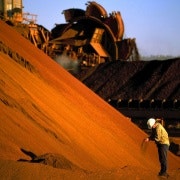



The list of countries currently reviewing their nuclear (power, not weapon) programs amid the ongoing crisis in Japan is getting bigger. China and India rank as the most important due to their enormous future power needs which, if supplied by nuclear or renewable resources, will be much cleaner than if they are met by coal. Neither feature prominently as recipients of Australian uranium yet because China's nuclear program is fledgling and India hasn't signed the Nuclear Non-Proliferation Treaty. According to the World Nuclear Organisation, the vast majority of Australian uranium exports end up in the US, EU and Japan.

The flight from all things nuclear and uranium hasn't been confined to the political sphere. Shares in General Electric, the designer of the 40-year old plant, despite liability being pretty firmly fixed on the operator. Russian state-owned uranium miner ARMZ has pulled its $1.6 billion bid for Perth-based explorer Mantra Resources. Shares in Namibia-focussed uranium miner Deep Yellow are down 33 per cent since the crisis struck, yet managing director Greg Cochrane in a KGB interview maintains that "In essence, when one looks at the statistics, one can see that [nuclear] still remains one of the safest, and if not the safest, source of base load energy generation in the world." Whether that point ends up reassuring understandably frightened consumers around the world remains to be seen.





 Call 1300 880 160
 Start a chat
 Schedule a call










