
Rates, Wars, and AGMs




[Music]
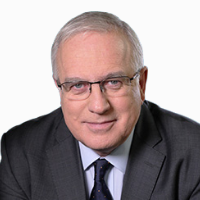
Hello, I'm Alan Kohler, Editor-at-Large of Intelligent Investor and Finance Presenter, Columnist and Podcaster for the ABC.
And I'm Stephen Mayne, contributor at Intelligent Investor, Founder of Crikey and shareholder activist and we are, Alan, The Money Café. There you go, I beat you to it.
You did, well done! RIP Dolly Parton this morning, Stephen.
Yes.
What she should be remembered for apart from lots of hair and all that, is having written I think more than 3,000 songs. She fundamentally started her career as a songwriter and started singing them eventually and her biggest hit was '9 to 5', which I think is an anthem for the working woman.
Absolutely, it is. She got to 80 - she's probably featured in a few of your Saturday morning song of the day videos that you put in every week in your Weekend Briefing.
She will be this week, I think.
Absolutely. She got to 80. Speaking of age, it's Charlie Goode's 88th birthday today, he's the oldest-serving public company Chair in Australia and a sort of pillar of the Melbourne business establishment of the Liberal Party, a former ANZ and Woodside Chair, he's off all those but he's still chairing the $2 billion AUI listed investment company. So there's hope for all of us to keep going, Alan, we're all old men, but we can keep going and if we get to - well, Dolly's, what, six years older than you?
She's six years older than me, exactly, that's right. I propose to live beyond 80, I must say - and not only that, to be working beyond 80.
Absolutely. One job you haven't got is Essendon coach, but you're a powerful Essendon coterie member. Would you have appointed James Hird?
Stephen, I'm not a member of any coteries.
I'm being sarcastic, you're just a powerful supporter of Essendon who wasn't consulted and Mark McVeigh got the job when all the powerful Essendon supporters were saying, "Give it to James Hird..." despite all the peptide controversies. What would you have done, boss?
I would have done what Andrew Welsh and the rest of them actually did, which is to have a proper process and pick the best person. Obviously, I wasn't in the room with the interviews, but I actually think they probably did pick the right person. Mark McVeigh, 'Spike' as he's known, we'll see how he goes. Three-year deal...
Three-year deal... The other prediction, Swans Chair Andrew Pridham, 24 years in the job, won't be there in a year's time. He's a big corporate guy, he's a Moelis or MA Financial, big investment banker guy, I don't think that you can do 24 years as the President and then have a big culture blow-up like this and be the cleanup guy, I think he's going to be moved on within the year, I would think.
He's been Chairman for 24 years, I can't believe it. I didn't know that. 24 years? Unbelievable.
It's ridiculous. I'm a big fan of tenure limits. At public companies, things go bad when people get complacent, they've been there too long, they can't fix up their own errors, it gets all too cosy and it's boiling frog stuff and it just happens all too often. So, tenure limits, thank god the Americans can't have more than eight years of Trump. We have no tenure limits in any form of politics in Australia, when moving on long-serving entrenched leaders is the most important governance thing to be able to do, because people love power and leading, they never give it up if they don't have to.
There you go, it's no wonder Sydney's in trouble, crikey, Andrew should have moved on long ago.
Correct. Now, we should talk about business, we're a business podcast. Where do you want to start, offshore, Iran and US-Canada?
Do you want to start with my column in the ABC on Monday about why interest rates are rising?
I loved it. The competition between reckless big-spending Government and record big tech means everyone's issuing bonds and the bond price is going up, over-supply of bonds, unprecedented supply of bonds perhaps besides war time.
That's right, issuance of bonds. But as I pointed out in the piece, that's what everyone's talking about and I just think there are a couple of other things that are not being talked about in relation to interest rates and one is climate change. This is already the hottest year on record and we've got El Niño coming up - actually, well underway. There's also going to be and already is huge demand for capital to both deal with climate change and to try to offset it. There's that and also I think that bond investors are starting to become increasingly suspicious of Governments.
What I talked about in the piece was the rise in the Corruption Index by Transparency International, which is increasing everywhere. They do this annual kind of survey of corruption and the United States is now one of the most corrupt countries in the world, if not the most corrupt developed country and corruption is rising everywhere, including Australia, according to this Transparency International Index and I think that has an effect on the interest rates that bond investors demand.
Would you lend money to corrupt Donald Trump who leads America?
Well, if you do lend money, you're going to demand a higher interest rate to offset the increase in risk.
Did you love Trump's line the other day that in terms of all the options that Scott Bessent was looking at in terms of getting interest rates down, he said, "And then of course there's the military..." [Laughs] What's he going to do? Send the military in to take out the bond vigilantes in skyscrapers all over the world. That was one of his most puzzling comments of military action to fix interest rates.
I know, but the thing is, there's a tendency to regard somebody who's leading a country, whether they're called President or Prime Minister or whatever, there's a tendency to conclude that they must be smart, but that isn't necessarily the case.
I think they're often rat cunning, aren't they? To get to the top in politics, it's all about the kneecappings and the stitch-ups and the games and deals and... It's not the smartest person.
Obviously, Trump is a genius in some ways, but in terms of normal intelligence, he's not. Anyway...
He's just a brilliant casino hustler at the end of the day, a New York property hustler. But what about his latest plays with economic asphyxiation of Iran? Do you think in Beijing they're sitting there sitting up straight, terrified, saying, "Oh my god, we're going to have to stop buying 90 per cent of Iran's oil or Donald's going to crucify us with tariffs."
You're right to identify China as the key to this, because China is by far Iran's largest trading partner and America is now warning that anyone who trades with Iran is going to be subject to secondary sanctions of some sort, they haven't been identified but there'll be sanctions on people who trade with Iran. Okay, so then it comes down to America versus China again and what sanctions are they going to do to China? Xi Jinping's Government this morning, I'm reading on Bloomberg, has sent a message to America saying, "Be careful here! This is not going to be something you can do. What do you think you're going to do?"
I think it's going to be empty rhetoric again, China will not take any notice of what America is doing and I think basically what it's about, obviously, is trying to ensure that Iran does not control the Strait of Hormuz and that's why they're trying to asphyxiate the economy, they're trying to make sure that Iran will not control the Strait of Hormuz, but that will not be successful. Iran clearly does now control the Strait of Hormuz through this body that they've created called the Persian Gulf Transit Authority and I think that train's left the station, basically.
The Americans can do the counter. They can actually blockade the strait themselves and stop trade into Iranian ports, but that's obviously a temporary measure, not a long-term solution.
Can they really block it?
Temporarily they can. Now they're trying Operation Economic Outcast, because they think they've actually been quite effective with their blockade and the Iranian currency is crashing and all the economic indicators within Iran are terrible, but their ability to absorb pain is remarkable and so I just think that they will start bombing oil infrastructure in the region if - this is the other key card they've got. Shut the strait and bomb your neighbours. The Americans don't seem to have an answer for that 175 days into this war and just 70 days until the midterms when Trump will get cleaned up, partly because of this stupid war he started.
Speaking of Iran's currency, it's about to go through the million rials to the Australian dollar mark, it's up to 983,000 to the Australian dollar. I think it'll be something worth noting on the ABC news when it goes through a million, what do you reckon?
You always love the quirky ones, you got Ooshies on last night, so why wouldn't you get a million Iranian... [Laughs]
That's right.
Is there a good graph? Has it gone from parity back in the Shah's day or something?
That's a good idea, that's a good thought, because it certainly has plummeted in recent times. This year, it's fallen quite a lot, from 600,000 to 900,000.
Lastly, on internationals, we've got Canada versus America on tariffs and again, is it all empty threats? The Americans were just really pissed off that they couldn't get their wine and spirits back into the provinces in Canada and it's just all blown up and Trump's gone 50 per cent tariffs and 'Carney Tough Guy' is going to go counter. Thankfully, it doesn't all start until January so it'll probably be sorted before then, but what's your take on the whole Canada thing?
Clearly, it will hurt Canada's economy if the tariffs go ahead. America's market is much bigger than Canada's. Canada needs access to the US market, but look, I think it's another example of Trump's incompetence, really. The New York Times has got a nice editorial this morning, the heading is, "The Ludicrous Argument Behind Trump's Tariffs" and it's worth reading if you're a New York Times subscriber, I think it's great. It's crazy, really. But good on Mark Carney for standing up to him, sure. It was an offer that he couldn't do otherwise, Mark Carney, obviously he had to do what he did.
His timing was pretty good though I think in terms of - he's a good chess player, Mark Carney, he knows when to go tough, he gets his timing right and everyone tends to laud the way he leads and look at him as the best leader of the free world at the moment, even though he's a political novice relatively speaking, only been in the job for over a year.
Well, he's run a couple of central banks and all that, he's not a novice in general.
He's the ultimate globalist, Chairman of Brookfield. But I love him, he's my favourite politician in the world at the moment, to be honest, and I'm happy sending him on to do a few rounds with Trump, it distracts Trump from everything else... I think he's doing well.
Before we get onto questions, I hadn't had a chance to talk to you on the podcast here about your AFR profile which was a big deal a couple of weeks ago, how did you feel about it?
Yeah, I was very nervous going in, I sort of said to the reporter, "I'm treating this as a performance review of my life," so I flooded the zone...
What do you mean you flooded the zone?
Well, I just disclosed everything. Last time I got on the cover of Good Weekend 20 years ago, I said to the journo, "Well, if you want to quote any critics, these are the six people who hate me the most and you can go and speak to them." And that's all he did, he went off and spoke to those six people, they all tipped the bucket on me and so I was once bitten, twice shy. I was sitting there thinking, have I upset the Fin Review? I've been campaigning on capital raisings, I asked a couple of naughty questions at the AGM last year...
Anyway, in the end, it was fine, it was reasonable. I probably over-disclosed, talking about the end of my marriage and having ADHD and obviously the biggest one was the crazy 48-hour cycle that I live my life with, where every second day I'm on top of the world and every other second day I can barely function. That sort of drives everything in what I'm doing, including the fact that we do our chats fortnightly because yesterday I was in bed most of the day asleep, in between a couple of online AGMs. But it was sympathetic too and I disclosed a lot and I've had a lot of nice feedback. I've even had some friendly text messages with Jeff Kennett, would you believe, in the aftermath.
I keep bumping into Jeff at the gym, we go to the same gym and he used to hate me but now he's chosen to start shaking my hand.
Well, he hounded you out as the Editor of The Age, didn't he?
He did.
We had a common enemy there. We never actually got together and said, "Let's..." - but he gave you absolute hell as Editor of The Age.
He did.
And now you shake hands in the gym and we have friendly texts, there you go. He gets to 80 and he's a forgiving guy.
He is. It should be the other way around, I kind of forgive him, I suppose because at the age of 74 I'm beyond that. But we ran a story about his wife's business getting Government contracts, an advertising business...
KNF...
He never forgave me for that.
Yes, even though it was the Sunday Age that did more of that provoking with your mate Bruce Guthrie, he copped it even worse, didn't he?
He did.
He was very combative, Jeff, but I like the idea of - it's like I disclosed in that AFR piece that I've now got civil relations with James Packer after 25 years of fighting the Packers, I like being able to fix long-term fights.
You two are best mates, you and James Packer.
No, we're not best mates, we've had three meetings and a few hundred text messages, but it's surprising how much we agree. "Who do you hate? Who do you like?", "Oh, actually I agree with that."
[Laughs] Are you ready for the AGM season coming up? How many meetings are you going to go to this year?
I'm settling into 300 a year, that's going to be my sort of standard. But the new tactic I'm doing this season, is last year I ran for 17 boards in six weeks, I think it was, but all the nominations went in on the last day. I wanted to give them no time to respond or negotiate, so at 4:55 on the last day, I'd do a nomination. This time, I'm going to nominate really early and see if I can leverage up some negotiated outcomes. I've had a good one I can tell you about, Alan. Origin Energy, for the last five years, have banned online access at their AGM.
So I lodged a nomination and I said the platform was that you should have online access and they've caved and they've agreed to have online access at their AGM, so I withdrew my nomination, so that will never appear publicly, except on here and I've tried the same tactic with BHP. They run physical meetings, which is unacceptable, so the $341 billion giant with their shares at a record high that will currently be scratching their heads saying, "Hmm, do we offer online AGM questions this year to get this gadfly to go away or do we just have a contested board election and we'll see where they land?" Because, frankly, for me, it's unacceptable for major companies to not embrace the internet and have online access at their AGMs and I find that GrainCorp was another which folded after a board nomination. So I'm going to try that tactic of spraying board nominations at a whole bunch of Perth-based companies in particular, Regis Resources, Liontown Resources, GenusPlus, Black Cat Syndicate, Fortescue...
There's all these big Perth-based miners that force you to fly all the way to the world's most isolated city just to participate in the AGM, so my response is going to be early board nominations and I'm hoping most of them will go the way of Origin and say, "Okay, we'll have online access if you withdraw your nomination," and it's a good deal, I'm happy to do it.
Good for you, Stephen! [Laughs]
[Laughs] It's not the world's biggest issue, is it, Alan? Online access at AGMs, but it's my little thing and with my cycles, the only thing I can do on a slow day is ask questions at an online AGM, because I can't leave the house, got no energy. I'm almost trying to lock in my next 10 years of don't leave the house, but do a few online AGMs, but if companies don't offer it, then I'm stuffed, really stuffed.
What is a gadfly, by the way?
Actually, it's funny...
Is there such a thing as a gadfly?
Eric Beecher actually sent me the definition, because he was the one who said, that there's not enough gadflies, then the Fin Review puts it on the front page, "The Last Gadfly", and the definition is this, "A person who annoys or criticises others with persistent questions and sharp remarks, often to stop people from being lazy or too comfortable."
Yeah, yeah, I know all that, but is there an insect...
Yeah, there's also a bug that's like a blowfly that's really annoying, so we're definitely not going with that one.
You're an annoying insect, Stephen! [Laughs]
No, I'm challenging lazy people to not be too comfortable with persistent questions and sharp remarks, I'm happy to put that one as a badge. I don't know if I'm the last gadfly, there'll always be gadflies, we just need a few more of them.
We do!
Journalists are basically gadflies, they ask annoying questions of lazy, comfortable people. It's basically an extension of journalism, a good gadfly. You're a gadfly, Alan, you ask sharp questions.
I'm never going to do 300 annual meetings a year, Christ, I can't imagine anything worse. A fate worse than death... Even one annual meeting is bad enough.
Actually, we had a funny one yesterday. I went to the PointsBet AGM and their gambling competitor, Betr, is the second-biggest shareholder with 27 per cent, but they're controlled by this Japanese company, MIXI. I asked the question, I said, "Last year, Betr voted against everything, what's happened this year?" And the Chairman, Brett Paton, said, "Well, as you can see on the remuneration report on the proxies, it's 99 per cent in favour, so they're okay, we don't mind them." Then this message comes through, "This is the Betr person here, we just want it on the record that we voted against the remuneration report and caused a strike." So in other words, they voted at the meeting, which rarely happens. They've gone in there to the meeting, the Chairman thinks he's got 99 per cent and avoided a rem strike, he's gloating about it and then they've gone bang!
That's great.
I would like to think that was partly because of my question that got the Chairman gloating and Matt Tripp was probably listening in and said, "I'll teach you a lesson, son. Don't take us for granted!" Bang, 27 per cent against rem strike and, "Put that on the public record, son."
What a gadfly you are, Stephen.
It was a good gadfly moment, that one. Anyway, enough about us, Alan, we should do some questions because we've got some rippers.
We've got tons of them too, we're not going to get through them all but we'll do our best. Before we do that, can we have a quick word from our sponsor please.
[Recording]
Last year's best-performing ETF became one of this year's worst. That's how quickly things can change.
With more than 450 ETFs now on the ASX, how do you know where to start?
The free InvestSMART 2026 ETF Scorecard reveals this year's winners and losers, what happened to last year's top performers, and which ETFs have delivered over the longer term.
It also includes InvestSMART's star ratings, helping you look beyond recent performance and compare ETFs on a broader range of factors.
Before you choose your next ETF, download the free 2026 ETF Scorecard at InvestSMART.com.au/etf-report.
Past performance is not a reliable indicator of future performance.
[End recording]
And just to remember, this is general advice only. If you need personal advice, please go and see a financial adviser. Okay, Miriam says, "Every day, we see small transport operators going bust. Most would think it's the price of fuel driving transport companies down, but the reality is this is caused by long-standing and endemic driver shortage. We have held 57 interviews this year for HC and HR drivers, out of which we have contracted one person. The majority tell us that they just need to tick a box for Centrelink.
Not only is it an inordinate waste of our time, but it augurs an oncoming catastrophe. We need immigration numbers to increase dramatically. We're not alone, many of our mates in the industry are in the same boat, along with the many tradies, small business owners and builders we come into daily contact with, they all voice the same complaints, no one wants to work and we need more immigrants who do. Just an idea for your podcast." Well, that's interesting.
Well, Pauline wouldn't like that one.
It's really interesting to get somebody who's on the ground and is getting all these Centrelink box-tickers - Christ, I didn't know that.
So much for the jobs-pocalypse. The issue is lack of workers for business - and this is the David Farley point. David Farley is a One Nation MP, but he's the ultimate farmer advocate, so he knows how important migrant labour is for farmers and aged care sector and all the other sectors, so he's pushing back on One Nation's crazy 'we'll slash the migration numbers' campaign and hasn't it been a fascinating few days for the immigration debate?
It has for that reason. What Miriam's question tells us is that the problem isn't that immigration is too high, whatever it is now. In the latest financial year, it was 306,000, supposedly coming down to 225,000, according to the Treasury forecast, which everyone keeps calling a target but it's not yet a target. Anyway, arguably, the immigration in 2022-3-4 was too high at 500,000 on average per year, but probably not now. The problem is that we aren't building enough infrastructure and housing for these people, but we need the people, which is what Miriam's saying, we need the people, we have to have them. So yeah, interesting...
And it's going to be very difficult for all of the players who are in an arms race to promise to be tougher in getting immigration down faster, that they're going to go headlong into the reality of 40,000 Pacific Island workers on farms, 70,000 aged care nurses, that the reality is - and this is the business community, the employers of Australia will be at the forefront of the pushback against the political pile-on against migration, because it's economically very, very important.
The other problem implicitly identified by Miriam is the fact that the Government has kind of outsourced immigration to universities is not helping, because universities do not teach the skills that we need, they don't teach truck drivers or tradespeople or small business people and so on, they don't teach the skills that we require, they teach business management and all this other stuff that foreign students are coming to do at university, because the students are not doing those courses in order to get a job in what they're doing, they're doing it in order to get permanent residency, because becoming a student is a very good pathway to permanent residency.
Tony Abbott the other day was on a podcast complaining that we've outsourced our immigration policy to a bunch of universities.
Well, I've been on about that for years.
I do think that will be the sharp end of where the policy lands. I think it's going to be a crunch on international students.
Rob's got a long question which you're going to summarise, are you?
Yes, Rob's saying that he's had a successful business for 40 years and he's basically saying that it's his own intuition and sixth sense that often leads to his success that no AI could ever duplicate and then he goes on to talk about his wife, who's a pathologist at Sonic Healthcare and makes the point that Sonic employs thousands of pathologists around the world and not one of them has been sacked for AI yet and he thinks that the whole AI jobs-pocalypse is a myth and with pathology it takes 20 years to become a highly paid, successful, highly skilled pathologist and there's no sign yet that Sonic Healthcare or anyone else has come up with any sort of AI that's going to wipe out pathologists who are some of the highest-paid PAYE employees in the world.
He thinks it's all a bit overblown and I'm saying - I don't know, it's an interesting point. I guess it probably won't be Sonic itself that pioneers the AI move, it will be disrupters and start-ups and challengers to Sonic. So, maybe we look at the scoreboard in five years and it might be a different story. But Rob is saying the scoreboard at the moment in the pathology space in particular, is a whole lot of hot air, not a lot of lost jobs from AI and stop beating this whole thing up! What do you think, boss?
I think it's early days... I mean, clearly, he's right, as things stand, the job apocalypse has not happened at this point, that's true. It's starting to happen in some places, you can see declines particularly in start-out early-stage employees, young employment is dropping off in some areas but it isn't yet an apocalypse for sure. I think there's always a danger in taking a snapshot in time and then extrapolating that and saying, "Everything's fine."
That's right. 7 per cent of jobs are driving jobs and I think maybe Miriam's thing, the solution on Miriam's question is going to be driverless trucks and obviously call centres used to be 3 per cent of jobs, that's no longer. Call centre workers, that's falling away big time, software engineers, graphic designers... It is sector by sector and sure, at the moment, pathology hasn't been hit, but I agree, I think it's too early as well. I think you're right, the five years. This week, we've had the Robot Olympic Games in Beijing and I keep seeing these videos of robots running and doing all sorts of athletics things. Most of the robot competitors at this thing are Chinese, not all of them, but most of them are Chinese.
China is going hard at AI robots and the reason is because their population is declining and they're starting to have a workforce shortage. They are going hard at robots to replace people and they reckon they'll get there and do it. You keep seeing robots doing 100 metres and then bashing into the wall at the end and then collapsing in a shower of sparks... But this is just the start, this is just the beginning. You look at cars in the 19th century when Mr Benz was inventing them, they were terrible things, they couldn't do anything. Look at a car now! I mean, obviously it's a hundred years later, but it didn't take long for cars to get quite good.
Duncan says, "I subscribe to Alan's Weekend Briefing and you wondered this week about the barriers to modular prefab housing. I run Clarence Village, a seniors community housing provider in Grafton, New South Wales. We're building a social housing development of modular homes and trying to source funding from another round of the HAF. The main barrier to modular is finance. Because the homes are constructed offsite, the bank has a hard time securing construction finance; title only transfers once the buildings are onsite.
We got around this by doing an equity partnership with the New South Wales Government to co-own the end site and leaseback on a peppercorn rent. The Housing Australia Credit Team is extremely risk-averse and makes it very hard to get concessional finance, especially for modular builds." What an interesting point - banks only lend when you're building the thing onsite.
Why would that be? I can't understand that.
How do you offer security if the house, as it's being built, is sitting in some factory hundreds of kilometres away?
Well, presumably when you're building the thing onsite, the security is on the land.
And this is the point, Alan, is that of our $12.5 trillion of residential property in Australia, about $9 trillion of that is land, 75 per cent roughly. Just secure the land and that's how you get around it.
So are we saying that people building modular homes don't have any land, is that what's going on?
No, he's just saying that we can't get finance on the actual construction job as it's being done because it's somewhere else. It sounds like it's just a bit of a box-ticking thing with banks, they just need to actually accommodate modular builds and provide finance, but it's interesting that we've got a coalface example of the financing challenge with modular builds.
Fair enough. Adam says, "ETFs are all the rage these days, modern finance media seems to spruik, particularly for first-time investors or younger Australians. The concept of dollar-cost averaging into three or four ETFs for global and Australian market exposure, etcetera... 'This is the path to great wealth,' they say. Are they right? Surely, maximising super contributions is the better play? You can't touch it and it slowly compounds in a favourable tax environment. Are generations of Australians being lured into buying ETFs with their savings which effectively mimic the function of superannuation?
"If you're in your 20s now and you wanted to improve your lot in life, would you be on the ETF train like so many others, or would you be taking greater financial risks and if so, what type of risks would you be taking?" I think Adam's a bit all over the place. ETFs and super are not competing things, they're two different things. Adam's right in that super is a tax environment...
Save your tax but lock it up, no good if you're in your 20s trying to save for a house.
But you can have ETFs in your super, right?
You can. But he's saying that young people are all investing in ETFs and I guess he's asking is there a higher risk option and it depends if you're talking about a side hustle, starting a business... There's risk in how you make money and then of course, there's crypto or speculative stocks or get rich quick schemes, but they often come a cropper, big time.
More risky than ETFs is buying small-caps, I guess.
Correct, mining explorers or something like that. But you had Bitcoin on the news last night, Alan, up 20 per cent in three days.
It looks like the Bitcoin bear market is over, it's moving.
But why?
Along with gold, as an alternative, because the US dollar is declining. It's interesting that the US dollar is going down even though bond rates are going up, usually when bond rates are rising the US dollar goes up because it pulls money into US Treasuries, but that's not happening this time. Clearly, the global investors are looking at the risks in the US and don't like what they see. And so, they're looking for alternatives to the US dollar and central banks are buying gold and people are now starting to look at Bitcoin again.
Now, I'll jump ahead to Ben. We've got a couple of questions actually which is the alternative to interest rates question. Talked about the floating GST rate as another tool with inflation and then others are getting into the super question and Saul Eslake, actually, the economist, he's firmly on the train of changing the super contributions when you need to dampen inflation. He said, "Back in the day in the '50s, we used to have Governments that would put up taxes to dampen inflation, but these days no Government has the guts to do that." Saul's saying, use super as a way of doing it and whether you hand that to the RBA.
But it's all totally impractical, all these solutions, but it's a hot topic of discussion, Alan. If you had a choice between tweaking the GST or tweaking super as the secondary inflation-fighting tool given to the RBA, which would you go with of those two?
GST, obviously. Tweaking the super means that retirees aren't part of it and one of the problems we have in this country is that we've got a bunch of rich retirees and a whole lot of young people who've got no money, so doing it with super would just mean the young people with no money are copping it again, as they currently are with interest rates. Obviously, it's got to be GST. I want to talk about stuff that's...
GST's regressive though as well, isn't it?
I only want to talk about things that are going to happen. This isn't going to happen, let's move on.
Yeah, I agree. I'm going to settle with just do the fuel excise, that's the one we actually have done twice...
Yeah, but everyone's got electric cars now, come on!
Well, not everyone. I haven't, mate. You might be Captain Cool, but there's a lot of battlers who can't afford an EV and I think it's a very effective way to put billions in or take billions out of the economy. You could even do it with tobacco excise, Alan, just for all the smokers.
Stephen, it's a terrible way because you mightn't have an electric car but it's increasing and eventually everyone will have an electric car and so that will be that.
So to put taxes up, it just should be, 'Use fiscal policy, as well as monetary policy.'
Precisely, exactly, that's right.
Be pro-cyclical and put up taxes when things are booming and have a big deficit when there's a recession. It's the old thing but just politicians have outsourced, they haven't got the guts to do it and so it's all on the RBA and it just hits the 30 per cent of people who've got a mortgage unfairly when they go sluggish interest rates up just to try and tame inflation because the Boomers are spending too much. Your turn, boss!
Mark says, "In the last 12 to 18 months, the Federal Government has bailed out a number of companies, most recently Rio's smelter in the Hunter Valley, Tomago. My question is, why doesn't the Government take an equity position when handing over the billions of dollars, then handed it..." Hang on, what's he saying? What about the Future Fund?
He's saying, "Take equity and maybe hand it over to the Future Fund."
The reason I'm reading his question is because I totally agree. We, taxpayers, should be owning a part of Tomago. Mind you, it's a bad investment, the thing doesn't make any money so maybe that's not a good idea at all. If we're bailing something out, maybe we don't want to own something that has to be bailed out.
What we're doing is we're inducing an investment by Rio, because it's a co-investment so to upgrade the plant you've got to spend a couple of billion and then the Government's dividend is the ongoing taxes paid by the thousands of workers and the associated suppliers, etcetera, etcetera... So that's the economic argument. I agree, I would like to see them take equity a bit like Trump. Trump wrote the new rule book with his 10 per cent stake in Intel and he said, "Bugger this grant, $9 billion grant, I'll take 10 per cent of the company for that." And he's quadrupled his money. But I agree, I would like to see a bit of equity in those sort of things going on. Overall, I'm okay with Australia having an aluminium capacity, I think we get played by Rio and others with this but it's certainly a big trend, isn't it? Both sides of politics - there's no sort of market purist out there. The last market purist was Tony Abbott and Joe Hockey and they destroyed the car industry and no one else has gone near that ever since they've withered or died and we're not going to bail you out. I think it was a shame we lost the car industry because Abbott and Hockey were so brutal market forces types and refused to keep it going. Would you have saved the car industry, Alan, or would you have let them die?
I suppose it would depend on how much it would have cost. It's hard to know, isn't it? There is a point when it's too expensive to save it and we're all doing fine with imported cars...
We were making big cars and they were all gas guzzlers, so it wasn't a sustainable long-term industry and we haven't had a jobs-pocalypse since then. No one still talks about the disaster of losing the car industry.
Arguably, we could have done what China did, which is create or subsidise and build an electric vehicle industry here, because that would have been for the future as opposed to the past.
We've got the world's highest minimum wage, Alan, we can't do any labour-intensive manufacturing. It's got to be Cochlear, blood products... We've got a few high-value manufacturing sectors but bugger all...
Factories don't have human beings in them any more, they're all going to be robots.
Well, that's what we'll do better, because the robots are not getting the $26 an hour minimum wage.
Precisely. Got time for one more question, you can choose.
Alright, Toby says, "Great show, thanks very much for all your work. What if instead of 15 per cent compulsory super, this could be 7.5 per cent super and 7.5 per cent to cover healthcare, no out-of-pocket expenses when you get to hospital." Now, Toby, I'm going to put on my Treasury boffin hat and say...
Have you got one?
Well, I was the Treasurer's Press Secretary. When I was working for Alan Stockdale, Treasurer of Victoria, you'd go up to the Treasury and you'd say, "Someone's saying we should do this," and they'd say, "We hate hypothecation, it's all political bullshit, basically." And it is. The Medicare levy has got nothing to do with the funding of Medicare, it's just a flat tax on the highest income earners in the country. I would have preferred Peter Dutton and Tony Abbott's co-payment where you actually link the expenditure to a user-pays system.
So, don't further complicate the tax system, Toby, by saying we're going to put another levy on and this is just going to specifically target and focus on out-of-pocket hospital expenses, because you can't link the money going in to the money going out unless it's actually a direct user-pays thing. It's like when the pokies industry - they set up things like the Community Support Fund and so all the pokies tax revenue goes into hospitals and it's just a political feel-good thing to justify the sinful tax revenue of running the world's biggest gambling industry.
Yes, I couldn't agree more. I suppose what should happen if you're going to do it, is the Medicare levy should be whatever Medicare costs. The size of the levy should reflect the cost of Medicare, which it doesn't do. It's just, as you say, a tax that has nothing to do with...
It's a very progressive tax because the millionaires pay so much more and the people who are using Medicare are the people who haven't got private health insurance, so there's no connection between the people paying the Medicare levy and the users of Medicare, or very little connection.
No, there you go.
There you go, we've agreed, boss. Solved the problems of the world, very good.
Very good. It's great to talk to you, Stephen, and thanks everyone for listening to today's Money Café, I'll be back next week with James Thomson. As usual, send in your question to themoneycafe@intelligentinvestor.com.au and we'll try very hard to get to it. Sorry we couldn't get to your question today. Until then, I'm Alan Kohler, Editor-at-Large of Intelligent Investor and someone on the ABC.
I'm Stephen Mayne, the last gadfly and we'll see you in a fortnight.
[Music]
.jpg)

.png)
Got a question for next week? Please send it to themoneycafe@intelligentinvestor.com.au.




Frequently Asked Questions about this Article…
The article notes that the transcript will be available shortly. Check back on the same article page on InvestSmart / Intelligent Investor for the published transcript.
You can email your question to themoneycafe@intelligentinvestor.com.au — the article explicitly invites readers to send questions there.
Based on the article title, the piece focuses on interest-rate developments ('rates wars') and annual general meetings (AGMs), topics that are typically relevant to investors. The full transcript will provide the detailed commentary.
The article indicates it includes information and commentary about certain companies (listed as {COMPANY} in this excerpt). The full transcript, when published, should list the specific companies discussed.
Return to the original InvestSmart / Intelligent Investor article page for the transcript when it’s posted, and consider using the provided contact email if you have follow-up questions.
Yes — discussions about interest-rate moves and AGM outcomes are typically useful for everyday investors who follow market conditions and company governance. The forthcoming transcript should offer the full context and commentary.
The article specifically says a transcript will be available shortly, which implies a full written transcript will be posted rather than only a short summary.
The content is associated with Intelligent Investor / InvestSmart (as shown by the article URL and the contact email domain). To engage, email themoneycafe@intelligentinvestor.com.au with questions or feedback.

 Call 1300 880 160
 Start a chat
 Schedule a call










