InvestSMART Performance Update: September 2026





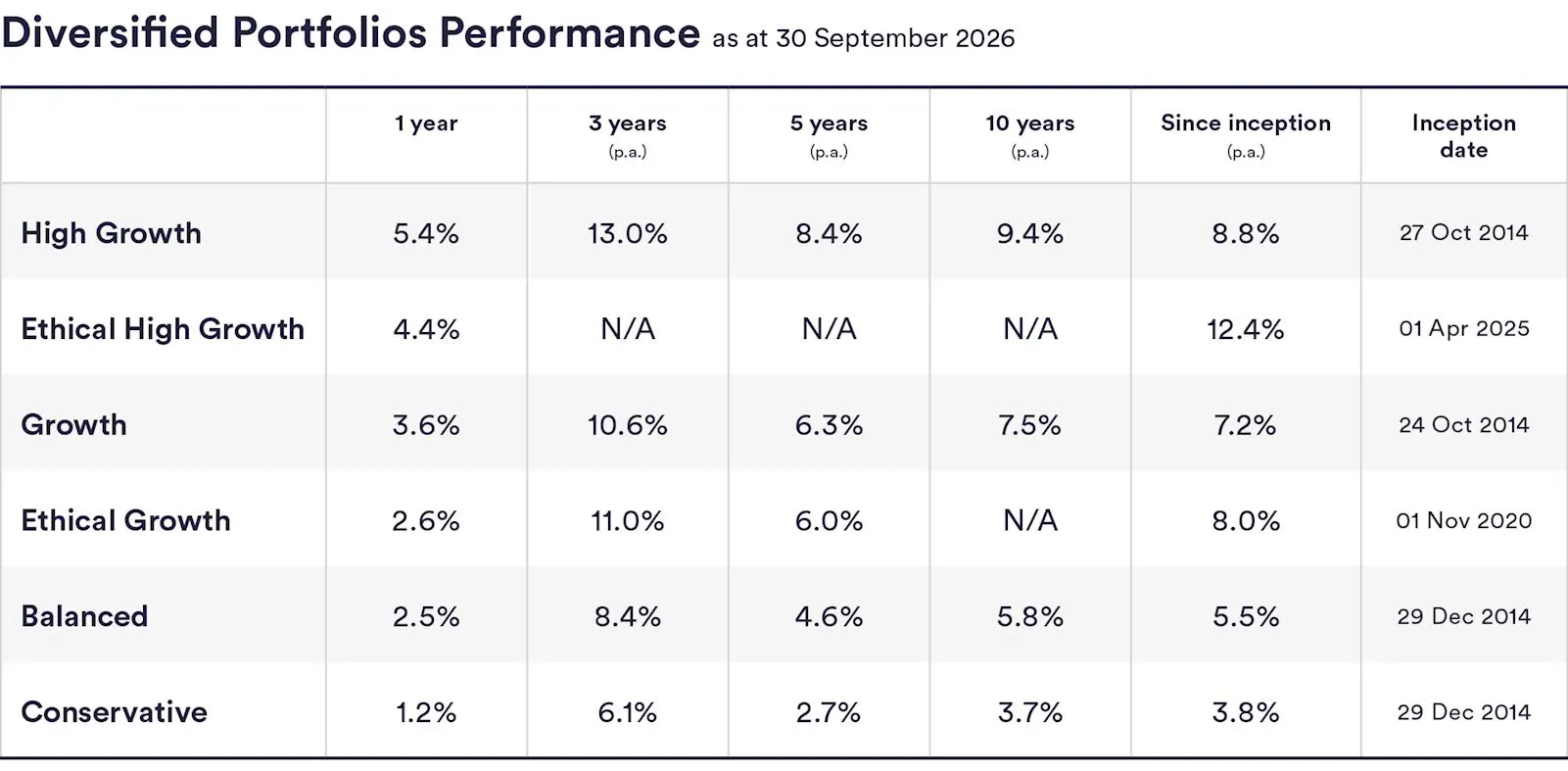
InvestSMART's diversified ETF portfolios have delivered some solid results over the past year, returning between 1.2% and 5.4% in the 12 months to the end of September 2026. Among our diversified portfolios with a 10-year track record, returns have averaged between 3.7% and 9.4% p.a. over that period.
Keep in mind that past performance is not a reliable indicator of future performance.
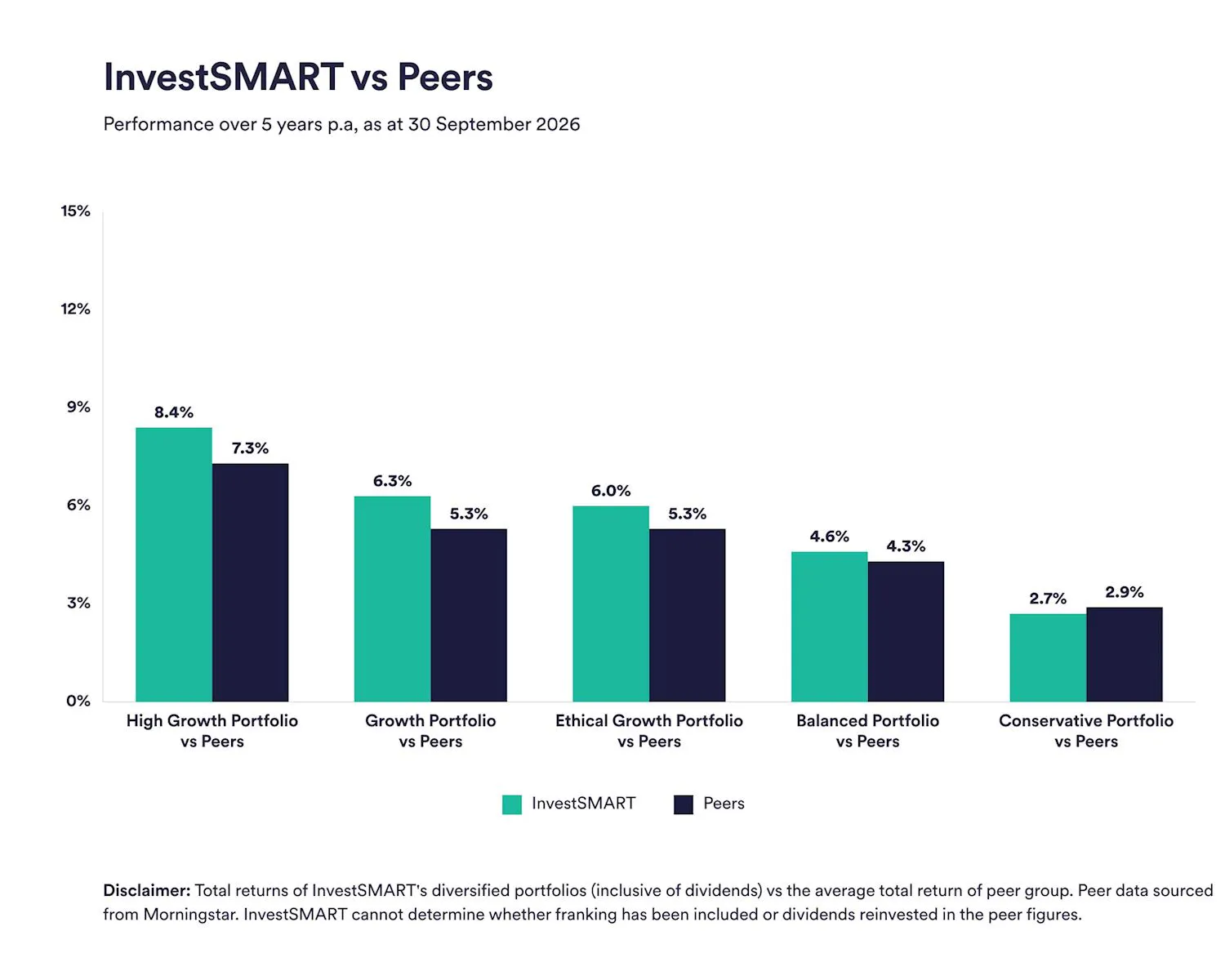
The chart below illustrates how InvestSMART's diversified portfolios have performed compared to funds in the same risk category over five years to 30 September 2026.
As you can see, over five years, the diversified portfolios have delivered annual returns of between 2.7% and 8.4%, with four of the five outperforming the average of competitor funds by between 0.3% and 1.1% a year.
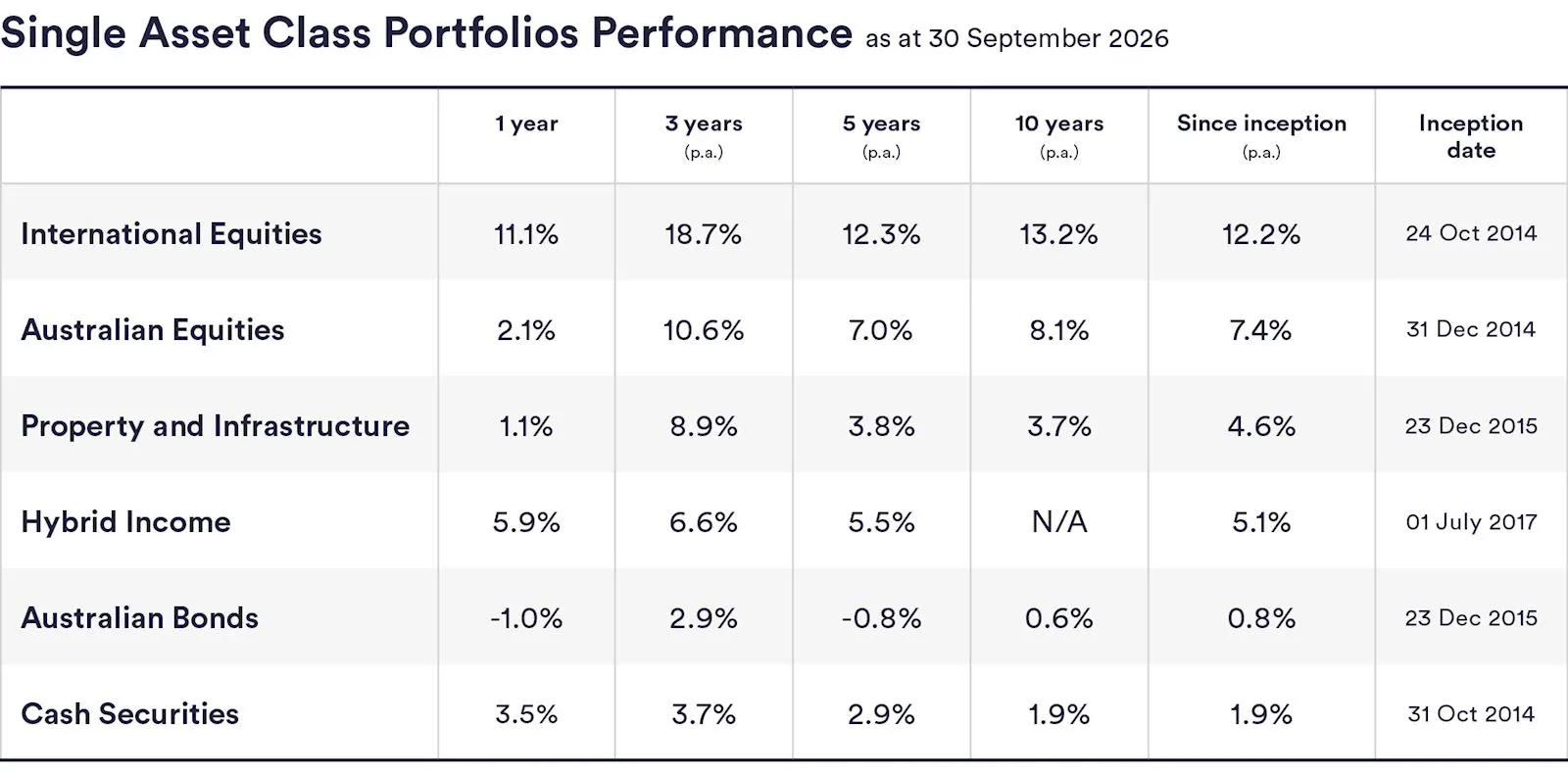
InvestSMART's single-asset portfolios returned between -1.0% (Australian Bonds) and 11.1% (International Equities) in the 12 months to the end of September 2026, and between 0.6% p.a. (Australian Bonds) and 13.2% p.a. (International Equities) over 10 years.
September wrap-up
September was a mixed month for investors, with inflation and higher interest rates putting pressure on sharemarkets.
Australian shares slipped 2.4% after five months in a row of gains. Overseas, US technology stocks continued to perform well, with the Nasdaq-100 up 6.3% in Australian dollar terms. Global shares also moved higher, with the MSCI ACWI Index gaining 1.9%.
Interest rates were again in the spotlight following the Reserve Bank of Australia's (RBA) decision to lift the cash rate by 0.25 percentage points to 4.60% - its highest level in 15 years.
Higher interest rates are also putting bonds back on investors' radar. After years of relatively low yields, bonds are offering more attractive income. Our latest analysis of ASX data shows Australian investors poured $3.8 billion into fixed-income ETFs during the September quarter, up 69% from the previous three months. Of course, bonds aren't without risk, and their prices can still fall if interest rates rise further.
It's a good reminder that different investments perform well at different times. Having a mix of assets in your portfolio can help you ride out the ups and downs without trying to predict what markets will do next.




Frequently Asked Questions about this Article…
InvestSMART reported that its diversified ETF portfolios returned between 1.2% and 5.4% in the 12 months to the end of September 2026. For diversified portfolios with a 10‑year track record, average returns ranged from 3.7% to 9.4% per year. The update also reminds readers that past performance is not a reliable indicator of future results.
Over five years to 30 September 2026, InvestSMART's diversified portfolios delivered annual returns of between 2.7% and 8.4%. Four of the five diversified portfolios outperformed the average of competitor funds by between 0.3% and 1.1% per year during that period.
InvestSMART's single‑asset portfolios returned between -1.0% (Australian Bonds) and 11.1% (International Equities) in the 12 months to the end of September 2026. Over 10 years, those single‑asset portfolios returned between 0.6% per year (Australian Bonds) and 13.2% per year (International Equities).
September 2026 was a mixed month: inflation and higher interest rates pressured sharemarkets. Australian shares slipped 2.4% after five consecutive months of gains. US technology stocks stayed strong, with the Nasdaq‑100 up 6.3% in Australian‑dollar terms, and global shares (MSCI ACWI) rose 1.9%.
The RBA lifted the cash rate by 0.25 percentage points to 4.60% — the highest level in 15 years. That decision put interest rates back in the spotlight and influenced markets, including renewed investor interest in bonds because higher rates have pushed bond yields to more attractive levels.
InvestSMART's update cites ASX data showing Australian investors put $3.8 billion into fixed‑income ETFs during the September quarter — a 69% increase from the previous three months. The main reason given is that after years of low yields, bonds are now offering more attractive income, which drew investor inflows.
No. The article notes that while bonds are offering more attractive income after years of low yields, they still carry risk: bond prices can fall if interest rates rise further. Higher yields improve income potential but don’t eliminate price risk.
The InvestSMART update suggests a balanced view: different investments perform well at different times, so having a mix of assets can help you ride out market ups and downs instead of trying to predict short‑term moves. In other words, diversification remains a practical approach for many everyday investors.

 Call 1300 880 160
 Start a chat
 Schedule a call