
InvestSMART Performance Update: February 2026





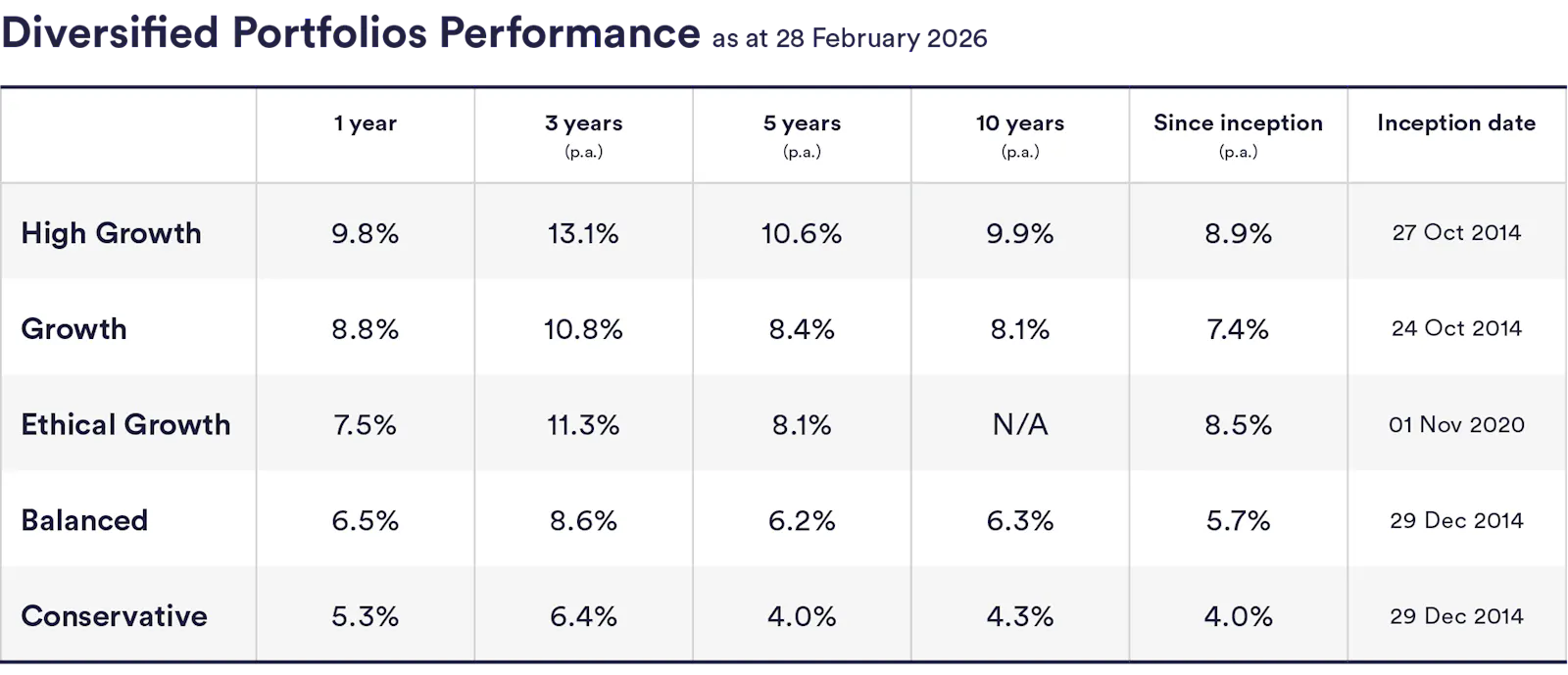
InvestSMART's diversified ETF portfolios have delivered solid results over the past 12 months, returning between 5.3% and 9.8% in the 12 months to the end of February 2026. Over 10 years, they have returned between 4.3% and 9.9% a year on average. Keep in mind that past performance is not an indication of future performance.
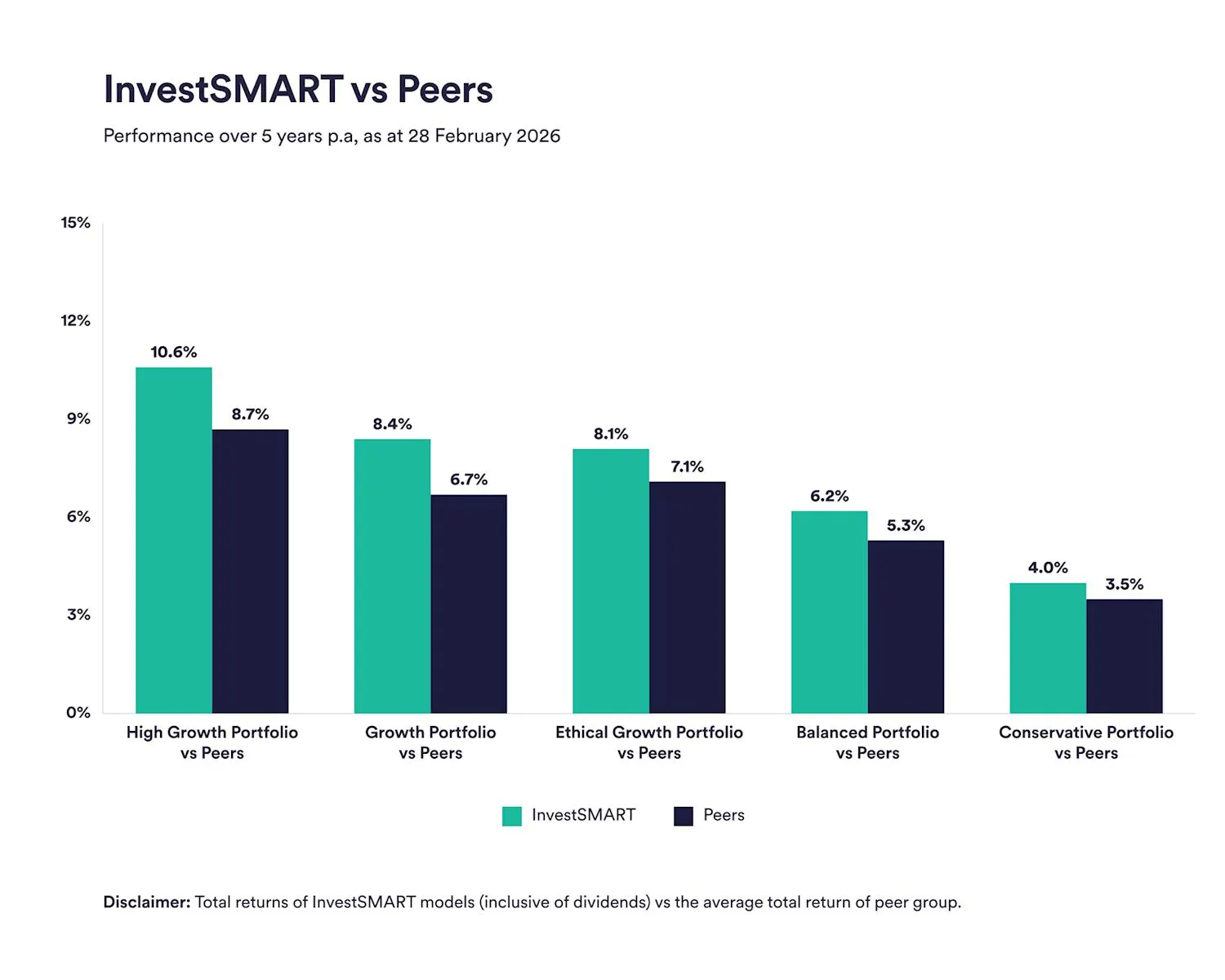
The chart below illustrates how InvestSMART's diversified portfolios have performed compared to funds in the same risk category over five years to 28 February 2026.
As you can see, over five years, the diversified portfolios have delivered annual returns of between 4.0% and 10.6% on average, outperforming competitor funds by an average annualised return of between 0.5% and 1.9%.
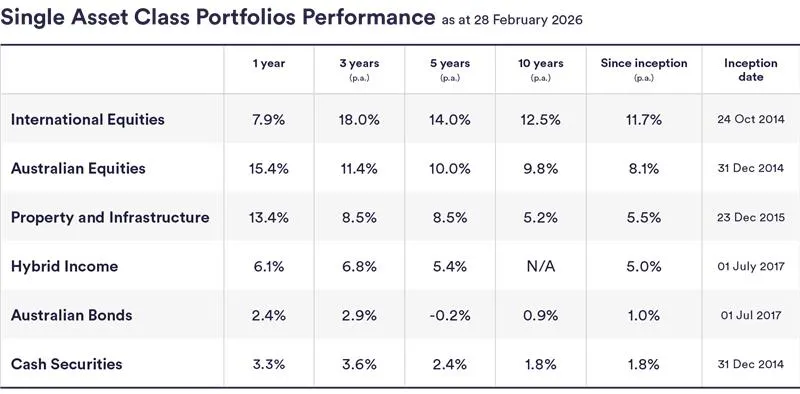
InvestSMART's single-asset portfolios returned between 2.4% (Australian bonds) and 15.4% (Australian equities) in the 12 months to the end of February 2026, and between -0.2% p.a. (Australian bonds) and 14.0% p.a. (international equities) over five years.
February wrap-up
February was a great month for investors overall, with many markets pushing higher. Australian shares performed strongly, with the S&P/ASX 200 gaining 4.1% in February. UK, Asia-Pacific and Japanese equities also outperformed. The US didn't fare as well, with the S&P 500 falling.
Even so, events at the end of the month were a reminder of how quickly things can change. The outbreak of conflict involving Iran and the spike in oil prices added to volatility across markets in early March.
The Reserve Bank also added to the cautious mood, lifting the cash rate for the second month in a row at its March meeting as inflation pressures remained stubborn. Even though higher petrol prices will push inflation higher, Governor Michele Bullock said they weren't the reason for the move.
Events like these can make investors uncomfortable, but they don't change how we invest. At InvestSMART, our portfolios are built around diversification, discipline and regular rebalancing, not around reacting to the latest headlines. That won't stop volatility, but it is designed to help investors manage it more effectively and stay focused on long-term goals.




Frequently Asked Questions about this Article…
InvestSMART's diversified ETF portfolios returned between 5.3% and 9.8% in the 12 months to the end of February 2026. As the article notes, past performance is not an indication of future performance.
Over five years to 28 February 2026, InvestSMART's diversified portfolios delivered average annual returns between 4.0% and 10.6%. Over 10 years they returned between 4.3% and 9.9% per year on average.
Over the five years to 28 February 2026, InvestSMART's diversified portfolios outperformed funds in the same risk categories by an average annualised margin of between 0.5% and 1.9%.
InvestSMART's single‑asset portfolios returned between 2.4% (Australian bonds) and 15.4% (Australian equities) in the 12 months to the end of February 2026.
Over five years, InvestSMART's single‑asset portfolios returned between -0.2% per year (Australian bonds) and 14.0% per year (international equities) on average.
February was broadly positive—Australian shares were strong, with the S&P/ASX 200 up 4.1% in February, and UK, Asia‑Pacific and Japanese equities also outperformed. The US S&P 500 fell. At the end of the month, an outbreak of conflict involving Iran and a spike in oil prices increased volatility in early March.
Yes. At its March meeting the Reserve Bank lifted the cash rate for the second month in a row as inflation pressures remained stubborn. The article notes higher petrol prices will push inflation higher, but Governor Michele Bullock said petrol was not the reason for the rate move. The decision contributed to a cautious market mood.
InvestSMART emphasises diversification, discipline and regular rebalancing rather than reacting to headlines. While that approach won't prevent short‑term volatility, it's designed to help investors manage volatility more effectively and remain focused on long‑term investment goals.

 Call 1300 880 160
 Start a chat
 Schedule a call










