
How to maximise your frequent flyer points





Okay, you've earned frequent flyer points, what should you do with them? It might seem like a simple question - well, you spend them - but in many ways, the optimisation of 'burning' (or spending) your points is far more complex and challenging than actually earning them in the first place.
Think of it this way: that magical number of points, looking like a lottery win with all its zeroes, has no real value until you exchange them. Let's look at some ways to propel your points.
Don't let your points expire
How many of us have a coffee-shop loyalty card, crumpled and fading, in the bottom of a bag or the centre console of our car? We're all guilty of letting 'points' - or their coffee-shop equivalent - become, well, 'pointless'.
You might think if that free coffee was a 'free' business-class flight to Bali, we might be more incentivised to use it. However, it turns out that a lot of people are as neglectful with their frequent-flyer rewards as we are with our coffee cards, despite the difference between a $5 latte and a $3000 spot at the front of a plane.
So, how do you protect yourself from earning rewards but never reaping them? Well, first, it's good to keep an eye on the calendar. Qantas has an expiry policy of 18 months from 'inactivity'. This means you need to activate your account - either by earning or burning points - every 18 months, otherwise they expire. If that deadline is fast approaching, you need to redeem or earn some points urgently.
Qantas does warn you of impending expiry at T-minus six months and T-minus 45 days. If you miss the warnings, it even offers the Qantas Points Challenge, which allows you to 'earn' your expired points back. All you have to do is get in touch within six months of their expiry - and earn another 2500 points within three months.
Maximise the burn
So, as a general rule, what can our points buy? Australian independent financial comparison website Finder has conveniently estimated the value per point of QFF points based on the
purchase price of Qantas flights and other options in February 2026. By their calculations, one point can be redeemed for this approximate dollar value in different categories or forms:
-
0.4 cents in the Qantas Marketplace
-
0.7 cents in charity donations
-
0.7 cents on hotels or car rental
-
1.0 cent in Classic Plus Flight Rewards, economy
-
1.25 cents in Classic Plus Flight Rewards, higher classes
-
2 cents in Economy Classic Flight Rewards
-
5 cents in Premium Classic Flight Rewards
-
3 to 8 cents in Business Classic Flight Rewards
-
5 to 12 cents in upgrades, with the highest being Premium Economy to Business.
These redemption values were calculated using actual Qantas ticket prices and conversion rates. Other airlines will have their own rates, with even the same tickets being priced differently via partner airline redemption. Please just use this as a relative guide and do your own sums.
Looking at the base redemption rates, it's easy to conclude that the only really valuable return comes from Premium and Business Classic Flight Rewards and upgrades.
There are times when shopping from the rewards store might be justifiable. If you really need to replace your toaster, and your disposable income is nowhere to be seen and your credit cards are maxed to the limit, it can make sense to buy it with points.
Similarly, if your chosen frequent-flyer fleet is pandemically grounded and the airline's balance sheet is starting to wobble, nabbing consumer durables before they run out, even a spare toaster, could be your best bet.
In any other case, you are not maximising the potential return of your points. In particular, redeeming your precious points for products or gift cards through the rewards store is close to the worst points decision you can make.
Then there are charity donations. If you're feeling guilty about something, then donating your points might feel like redeeming for redemption. Keep in mind, though, that there isn't a tax deduction, so it's better to donate your cash and receive the tax deduction and redeem your points on something more valuable.
Finding reward seats
An increasing number of loyalty-program members complain about how hard it is to redeem their points for upgrades and business-class and first-class flights. With the professionals and pointaholics staying up all night to snag these seats the minute they become available, it's no wonder.
Not surprisingly, various tools and services have emerged to help out. Advanced search tools and websites have appeared everywhere to help you get your desired flights. Generally, these work as aggregators that continuously monitor availability and alert you when suitable options become available. A few good examples currently in the marketplace are seats.aero and SeatFinder.
Additional or remaining inventory for 'off-peak' seasons generally gets released closer to departure dates. For domestic flights, this creates a sweet spot two to eight weeks before departure, when availability may be high and point redemption rates discounted, but for international flights it's best to secure the seat immediately upon release, especially to capture that anticipation value.
Multi-city searches can also help you strike gold when trying to redeem, as you get more options with different routing combinations rather than a static departure-arrival search. Routing through the major airline hubs of your chosen regions rather than sticking to direct flights can lead you to better reward-seat availability as well.
Upgrades are generally the most accessible option for optimising your burn - you don't need hundreds of thousands of points to turn an economy flight into a special treat.
Professional strategies for getting maximum value
Several advanced strategies can also further enhance your ability to book flights with QFF points effectively:
-
Mixed cabin bookings. Combine different service classes within a single itinerary, balancing comfort and points expenditure across your journey.
-
Positioning flights. Book separate flights to position yourself in cities with better award availability, even if this requires additional domestic connections or a scenic train ride.
-
Open-jaw itineraries. Fly into one city and depart from another without additional points, enabling more efficient travel patterns.
-
Speculative booking. Make provisional bookings when you find good availability, using Qantas' 24-hour cancellation policy to secure seats while finalising plans.
-
Unpredictable batches. Qantas has increasingly moved towards releasing seats in unpredictable batches rather than a steady daily flow, meaning seats may not appear exactly at the 353-day mark even for high-status members, which helps the rest of us find something.
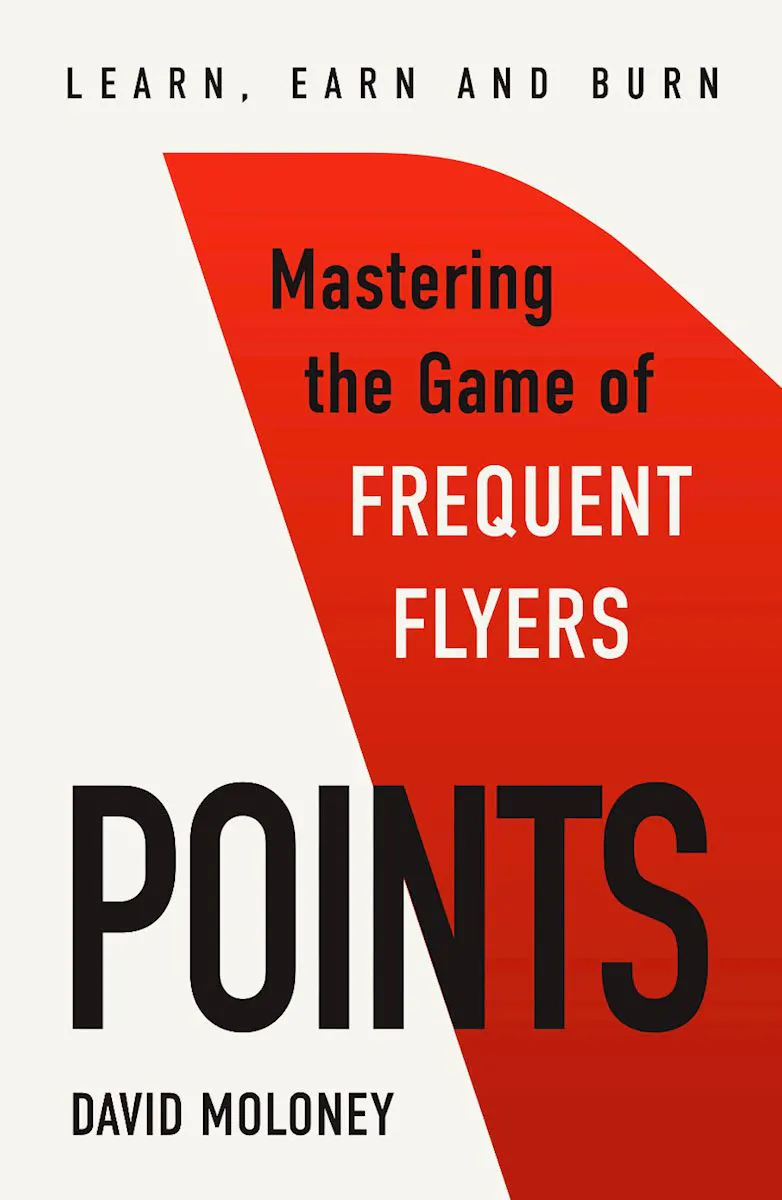
This is an edited extract from POINTS: Mastering the Game of Frequent Flyers (Major Street Publishing $34.99), republished with permission.




Frequently Asked Questions about this Article…
Qantas points expire after 18 months of account inactivity. ‘Activity’ means either earning or redeeming points. Qantas warns you six months and 45 days before expiry. If points do expire, the Qantas Points Challenge lets you reclaim them if you contact Qantas within six months of expiry and then earn 2,500 points within three months.
According to Finder’s February 2026 calculations, the highest value generally comes from Premium and Business Classic Flight Rewards and upgrades. Typical estimated values per point range from about 0.4 cents (Qantas Marketplace) up to 3–8 cents for Business Classic Flight Rewards and 5–12 cents for some upgrades, making premium flight redemptions the best way to maximise point value.
Usually not. Redeeming points for products or gift cards through the rewards store typically gives low cents-per-point value (around 0.4 cents in the Qantas Marketplace), so it’s generally a poor return compared with using points for premium flights or upgrades. It can make sense only in cash-constrained or emergency situations.
Donating points feels rewarding, but Qantas point donations do not provide a tax deduction. If you want the tax benefit, donate cash to the charity and use your points for higher-value redemptions like premium flights or upgrades.
Use advanced search and monitoring tools that track award availability—examples include seats.aero and SeatFinder. For domestic flights, there’s often a sweet spot two to eight weeks before departure when more seats and discounts may appear; for international flights it’s usually best to book as soon as award seats are released. Multi-city searches and routing via major hubs can also increase your options.
Everyday investors can use several practical strategies: mix cabins within one itinerary to balance comfort and points; book positioning flights to access better award availability; use open-jaw itineraries (in one city, out another) to travel more efficiently; make speculative bookings using Qantas’ 24-hour cancellation policy; and monitor for unpredictable seat release batches that may appear before the usual 353-day mark.
The article suggests it’s reasonable only in limited scenarios—if you urgently need a household item and lack cash or credit, or if the airline is grounded and at financial risk so grabbing durable goods before they run out could be prudent. In normal circumstances, flights and upgrades offer far better value.
Treat published cents-per-point estimates (like Finder’s February 2026 figures) as a relative guide and do your own sums using actual ticket prices and conversion rates. Compare options—marketplace purchases, hotel/car rentals, economy vs premium Classic Flight Rewards and upgrades—to identify which redemption gives the highest cents-per-point return for your travel plans.

 Call 1300 880 160
 Start a chat
 Schedule a call










