
2026 heats up!




[Music]
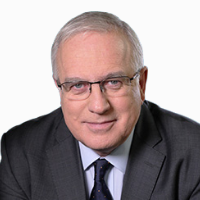
Hello, I'm Alan Kohler, Founder of Eureka Report which is now part of Intelligent Investor and Finance Presenter and Columnist for the ABC.
And I'm Stephen Mayne, contributor at Intelligent Investor, Founder of Crikey and shareholder activist, and we are...
And we are...
The Money Café.
The Money Café in 2026. G'day, Stephen.
Back after a summer break. Alan, it was 48.9 degrees in Hopetoun yesterday, a record temperature for Victoria. How have you coped and how was your summer? What did you get up to?
Plenty of family and plenty of reading about AI. I spent my summer reading books about AI and also a book about Alfred Deakin, the second and third Prime Minister - anyway, that was for book club. But AI, I'm just trying to get up to speed on that.
One of your first two columns for the ABC was a very interesting AI piece. We've got plenty of AI questions today, so good to see you're all over the hottest topic at the moment - maybe the hottest topic except for old Trumpy.
What about your holidays, Stephen, did you spend it in Philip Island?
Yeah, Philip Island. Did a three-week house sit at Hampton in a nice house down near the beach which was good, played a bit of cricket, tennis and squash. So, nothing - I didn't leave the country or anything. Me and my two sisters, we hire a big house at Philip Island for a week, so all seven of our kids who are now 19 through 24, they all hang out with us for a week, so it's a really nice way to stay in touch with the young ones and actually see them in detail, so that was great this year, really, really enjoyed that.
Good.
But the news flow was incredible, wasn't it? Where do you start?
It was unbelievable. Every day you get up and open up the New York Times wondering what the hell you're going to get this time, it was amazing. It was such an amazing period and it's still going, really, let's face it. I read this morning that Mark Carney, the Canadian Prime Minister has said that he's told Trump and everyone else that he meant what he said in Davos, so he's not backing off at all.
I thought that was the best political speech - I'll go so far as to almost one of the best in my lifetime. I thought that was right up there, no wonder he got a standing ovation. The way he articulated what is happening and projected strength and realism, it was just fantastic.
It was and I do think that was a bit of a turning point, I think Davos in general was a turning point because in the weeks since then, the US dollar has fallen a long way, I think it's fallen about 4 or 5 per cent and it seems that the US is now suffering a capital flight of some sort, would you agree with that?
I do, I mean we're almost at 70 cents there, falling away - and I did love your ABC column explaining the history of Bretton Woods and how the US came to be the reserve currency and whether the old Keynes proposal for the bank or their global currency or the global exchange, an alternative to having the US as the reserve currency, whether that has legs to get up. What do you reckon? That would be a massive blow to the US if the world got together with all the middle powers, Carney leading it, said, "Righto, we're no longer having the US as a reserve currency because they're too wild."
I do think that some sort of proposal to create a new reserve currency formally would require another meeting like Bretton Woods, the meeting that occurred at the Mt Washington Hotel in July 1944, in Bretton Woods in New Hampshire, that would have to happen again, everyone would have to meet. But it's actually beginning to happen informally with various proposals to create other ways of doing things. China, for example, is requiring a lot of its trading partners to price the trade, to settle the trade in Renminbi and the four BRIC countries, Brazil, Russia, India and China, have all been working on a separate sort of currency process.
There was also a lot of work going into using crypto stablecoins, not Bitcoin or Ethereum, but one of the stablecoins which are tied to the US dollar or gold - and obviously, gold is being used now much more as a foreign exchange asset by central banks. So they're kind of switching out of US dollars and into gold as well.
We are actually going back to - I mean, Nixon tore up the gold standard, but in a sense they've now got more central bank money in gold than US dollars, so without any mandate from anyone, gold has never been more prominent as a reserve or a store of value reserve currency than right now. Australia's a massive beneficiary of that, producing 10 per cent of the world's gold.
Yeah, it's probably worth just reflecting for a minute on what happened at Bretton Woods, which was making the US dollar the world's reserve currency. There was 44 countries represented there, they all agreed to use the US dollar as the basis for trade and that everyone would tie their currencies to the US dollar and the US dollar would be pegged to gold at $35 dollars per ounce. Then in 1971, that was ended, the pricing of the US dollar and gold was ended by Richard Nixon, but that in a sense made the US dollar more powerful. What happened was that in order to conduct any trade, all the world's countries needed to have US dollars in order to pay for stuff they were importing, so everyone had to...
And a key part of that was the Saudis agreeing to price all oil in US dollars as well, that was a key locking it in moment as well.
That's right. The world trade in energy had to be in US dollars and that really formed the basis of it and so that constant demand for US dollars led to the US dollar becoming overvalued and it drove the value of the US dollar higher and that, in turn, destroyed the US manufacturing industry and I think there's a good argument for saying that that eventually led to Donald Trump, because there was so much inequality and unemployment in the rustbelt of the US caused by the overvalued US dollar, that there was sufficient anger in the US to basically chuck out the old system, wanting to drain the swamp, that sort of thing, and vote for Donald Trump.
The other thing it did, was it allowed the US to borrow with impunity, so they could just do endless deficits, they've now got the $37 trillion, and no other country can do that, as we've just seen this week in Japan, where a snap election call, suspend GST for a couple of years as a sweetener and the Japanese bond market has gone crazy. So, you can't do a sort of one big beautiful bill Trump massive tax cuts, unfunded. The Brits tried it with Liz Truss, bang, vigilantes got them; the Japanese are now copying it; yet, the US can get away with it because of that reserve currency thing.
That's right, but not for long. I think that's on the way out. The United States under Donald Trump doesn't want that. The want the power that comes from that, but they don't want the responsibilities that come with it as well. The thing is, they can't have both. What Mark Carney signalled is that the rest of the world and particularly middle powers, but also China and everyone, they're just saying, "Well, we can't rely on the US anymore..." and that's going to mean a big change in the financial setup of the world as well and we're seeing that obviously in the rise of gold and silver, which gold's hit now $5,000 US dollars an ounce and silver, $100 US dollars an ounce.
The silver price has gone up 340 per cent or something in the past couple of years. Partly because of a combination of safe haven asset, as well as needed for renewable energy and electric batteries and so on. It's kind of got this double whammy effect needed for the modern economy, modern technology, as well as being a safe haven. Silver is absolutely there and also copper with AI and...
All the rare earths and lithium's roaring back... It's funny, I've been working on my rich list a bit over the summer, anyone worth more than $20 million and there are so many gold mining CEOs or just investors who got lucky on gold companies going through the roof. It's amazing to think, the WA Government this year will probably crack a billion dollars in gold royalties for the first time and you might say that a billion dollars is a lot, but the royalty's only 2.5 per cent, Alan, so that means that they're producing $40 billion dollars' worth of gold to give the taxpayers, the owners of WA, a billion of that. That just shows you - and therefore the Federal Government is absolutely creaming it because they're getting 30 per cent of the profits.
I don't think people have quite realised how big an impact this commodities boom overall, but the precious metals boom has been great for Australia because we are one of the great gold producers, even if we've incompetently managed it, undertaxed it, Howard and Costello selling off two-thirds of our gold reserves at 5 per cent of the current price or whatever it is. But overall, we do benefit massively as a nation because we're a huge gold producer. $40 billion dollars of gold this year coming out of WA alone.
You're right, that's going to really support the budget. The MYEFO, the mini-budget in December, showed a structural deficit going forward and there was a piece in the Fin Review this morning quoting Chris Richardson, the economist who is all over the budget, saying that Government spending is blowing out, but the Government might get rescued by this commodities boom which is clearly happening. It's not just gold and silver, but copper as well and everything's just taking off. I mean, I think that this could be another situation where Chalmers gets hit in the arse with a rainbow.
We are the lucky country, we are the luckiest country in the world. Our terms of trade deteriorated continually for 100 years until 2000 and then we've just had this super cycle, where being a commodity economy has just got better and better and better. I don't think I've seen a time where it's been so many commodities are at record highs at the same time. Normally you get an iron ore bubble or you get a gold bubble or a copper bubble, but to have such a basket of commodities all doing well, probably with the most notable exception being oil, but we are so well diversified and hedged in terms of our dowry of natural resources that we're a rising middle power with rising wealth because of that and we can live large.
Speaking of all this, Rio Tinto is trying to get Glencore, do you think that will come off?
There's such a long history of major mining takeover disasters. BHP had a couple of cracks at Rio. Rio spent $44 billion US buying Alcan, that was a disaster. BHP merged with Billiton, that was a disaster. I think the risk always is that Rio Tinto current market cap, $220 billion, Glencore current market cap, $116 billion. Rio is looking to get those brilliant South American copper mines in particular that Glencore's got. But I hope they don't because the history is that you just overpay. It's almost the curse of the commodity. Countries can't manage massive commodity dowries, most countries blow it. Top of a boom big mining takeovers traditionally historically they've blown up a lot of cash.
But what if people are right that there's going to be a big shortage of copper, that's what the forecasters are saying, a big shortage of copper...
But is that a reason to buy Glencore for $120 billion dollars?
Well, it's just if you get set with copper and you've got copper and there's a shortage of it and the price goes through the roof and continues to rise because of that, then you'll be okay, I guess.
But when they paid $44 billion for Alcan, it was all about, we need clean green energy and Alcan's got all these aluminium smelters that are run on hydro power, they lost $30 billion on that or something. Everything's worth something for a price. I suspect it'll be very difficult geopolitically. No one wants to see the world's biggest miner created with all the power. This whole anti-globalisation push. I think it will be very difficult to get up geopolitically. I was going to give you one little snippet, Alan. Brian Gilbertson, the former BHP CEO, he died at the age of 82 on December 17. I've done a little bit of research.
He was the CEO of Billiton, who pulled off the worst merger in Australian history, I think you called it an act of hijacking or corporate terrorism, when BHP and Billiton merged 25 years ago and Billiton was given 42 per cent of the combined company when historically maybe it was 10 to 20 per cent of the value, so an absolutely shocking deal. Brian Gilbertson, the Billiton bloke, was given the CEO job of the whole empire, he lasted six months before he got fired for trying to take over Rio Tinto, Don Argus fired him and he retired on an index pension that was worth $1.2 million at the time...
That was indexed, was it?
Yeah.
I didn't know that, crikey.
When he passed on December 17, it was running at $2.4 million a year. He got more than $30 million after being fired in index pension, but the pain isn't over yet. Under the deal, two-thirds of it goes to his wife who has survived him, Rensche, they were married in 1970. She now gets $1.6 million a year until she passes. BHP shareholders are still paying for the worst takeover in history and Brian Gilbertson got the best ever pension deal of any Australian executive and he only did six months in Australia, flew in, ran the place for six months, got fired and then walked away with an index pension that every other Australian exec would die for, which is still paying 25 years later, even after he's passed.
Did you check that with BHP?
I've checked it, Alan, yes. We can't talk about people's private situations, but I haven't said all of that without doing some journalism, so yes... It's all laid out in the 2002 BHP Billiton remuneration report. I went off that and then I did do a little bit of checking just to get some numbers and it's a very big number.
A very big number, yes. Anything else to tell us, Stephen?
My other favourite story of the summer break was the two pokies giants... Aristocrat had been suing Light & Wonder for stealing its technology for its Dragon Train poker machine and they settled for $190 million dollars. Light & Wonder basically admitted it, basically said, "Yep, we've been stealing it and we've agreed to destroy it and cancel it, we won't do it again." And the Light & Wonder share price went up 16 per cent on the day. It literally created $3 billion dollars of value for settling a case.
Light & Wonder is a big pokies company and it's full of Aristocrat executives, a whole bunch of Aristocrat people went off to Light & Wonder, which used to be called Signature Games, they moved their listing to Australia because Australian investors understand poker machine companies because Aristocrat is the world's biggest at $35 billion. Light & Wonder's been gaining market share and growing and Aristocrat said, "You stole our technology, you've burgled all our staff..." they sued them in Australia, they sued them in Nevada and the share price was tanking because people thought the payout was going to be billions, they've settled for $190 million and the share price of Light & Wonder went up by 16 per cent and today it's worth $13 billion, it's incredible.
Light & Wonder brazenly stole their IP? They did.
They're blaming a rogue employee who has now been fired and they've also agreed to collaborate now and deal with these matters privately, because they're both actually worried about AI and the theft of intellectual property by scammers. So they're saying, "We should be fighting each other and stealing off each other, we need to work together to stop people stealing our industry stuff." So they've also come to an agreement about that. But I've never seen $190 million out the door, share price up by $3 billion, on a single day and it just goes to show that the market fears big court judgements and I think Light & Wonder got away with one because they were doing what was accused of and they've only had to pay $190 million, but they have deleted a whole bunch of files, they won't be using the Dragon brand anymore because they were burgling the Dragon Link poker machine, but there you go.
Very interesting. Before we move onto questions, just a couple of AI points that I just would urge listeners to google Dario Amodei's essay, which is on his website - he's got a website called darioamodei.com where he's written this kind of long, 20,000 word essay about AI and he's basically saying humanity has no idea what's coming and he's not ready for it.
The other thing is, you might want to google a three-hour podcast with Elon Musk that was done in December by these guys who run a podcast called Moonshots. If you google 'Elon Musk and Moonshots', it's three hours, well worth sitting through. I've kind of summarised it a bit in the Weekend Briefing, but really it's amazing and in some ways, it's ridiculous. Musk says that AI is going to take all jobs, human beings will basically be confined to hobbies, there'll be no work at all. That's kind of hard to believe.
Ridiculous.
But still...
You're sounding spooked, Alan. You've become a doomsday convert because a lot of these big names are making attention grabbing claims. We've got a couple of questions on it. Anyway, you've written the Weekend Briefing, but also an interesting column for the ABC, but it sounds like you are more on the side of, "Oh my god, look what's coming with AI!"
In some ways, it's a bit like climate change. It's an insurance matter... Are we saying that it won't be a problem at all? If you've got a house in country Victoria, you've got to insure it because it's no good standing there saying, "The fire's never going to get me," because it might, so you've got to take out insurance. I just think that whatever you think about climate change or AI, you'd be mad not to take out some insurance against... What that insurance looks like, I don't know. Climate change, obviously it's a matter of spending some money to try and mitigate it, but also get ready for it.
But with AI, what do you do? I think the answer is, as an investor, what you have to do is be part of the game, you've got to put at least some of your money in it and that includes things like copper and rare earths and the minerals that are required, particularly if you're in Australia. But also, I've put some money into a global AI and robotics ETF because you've got to be onboard, it's too important, too big.
I just hope AI can help us save climate change, Alan. Both require expenditures of enormous amounts of capital, but we're not talking about climate as much these days, are we? Anyway, we've got a couple of AI questions as well, Alan, so before we get to this week's questions, here's a quick word from our sponsor.
[Recording]
The market never sits still, so staying ahead of the curve matters. Intelligent Investor Premium helps you invest smarter without spending hours on research.
You'll get buy, hold and sell recommendations on more than 80 Australian and international stocks, special reports on big investment themes, market insights, interviews and Alan Kohler's popular Weekend Briefing.
The best part? You can try Intelligent Investor Premium for free for 15 days - even if you've tried it before. And you don't need to provide any credit card details. Just visit intelligentinvestor.com.au.
[End Recording]
Okay, first question is from Rose, "A lot seems to have happened during the break..." Yes indeed, Rose - "Including Trump openly talking about taking control of Greenland on strategic and resources grounds. So far, Australia appears to be sitting on the fence while European countries push back. My question is, should Australia be taking this kind of rhetoric more seriously and speaking up now given our resource wealth, strategic Indo-Pacific positioning, with multiple US bases and relatively small population. Could similar security and strategic value logic one day be applied to us?"
I reckon we take that as, why isn't Albo being the Mark Carney of the world and why are we so small target, quiet, not in the debate...? Should Albo have been at Davos to start with? I know, risk management, don't get attacked, but isn't it a time for middle powers to work together and shouldn't we, as a famously straight-talking nation with some pretty good powerful assets, both resources, bases, as Rose says in her question. I'm disappointed that Albo and the Government as a whole is not being more prominent in pushing back against Trumpistan and all that Trump represents and is doing.
I think Albo is going to have to make a decision because Trump has asked him to join the board of peace...
For a billion dollars.
For a billion dollars, so he's going to have to decide and of course, he should say no, but that's going to be seen as a snub and he's not going to be able to hide anymore.
I think Albo can say, "You're already taking us for a few billion with AUKUS, where we may not even get a sub or two in the end, even though we've been writing cheques for a billion, so give us a sub and then we'll talk about the board of peace."
Yes, I agree with you, I think that Albo at some point is going to have to stand up, really. I think we're coming to the end of the viability of a small target, keeping your head down, sort of situation, I think.
That's right. All the middle powers need to work together. Carney laid it out and it's divide and rule, that's how Trump prospers, by intimidating, standing over people, divide and rule. The biggest, most effective way to manage him is when everyone pushes back and there's overall outrage, that's when he TACOs, that's when he chickens out. But if you just let him go around and pick off one country at a time, then he'll keep doing that and he'll never stop.
I note that yesterday, India and the EU did a big trade deal including lots of free trade going on and Trump posted an amazing response on Truth Social just absolutely shit-canning it. Amazing.
Yeah, but that's what has to happen. Just like Canada's deal with China, a lot of beef going into China now, a lot of Chinese EVs going into Canada, that's exactly how to respond, is the other powers need to go and do active aggressive trade deals with each other. If Trump's going to attack Modi and attack India and he's going to attack Europeans, of course Europe and India's going to do a trade deal, it's absolutely logical and Trump's angry about it because he doesn't want other countries working together, but that's what he's causing to happen.
Anyway, Rob says, "I see Bluescope Steel is subject to a takeover bid from SGH Limited, an Australian conglomerate made up of disparate parts. They plan to sell the US operations to Steel Dynamics in the US and keep the rest. I'm suspicious." Says Rob. "What do you know about SGH? Are they going to strip the assets? Given Bluescope has a lot of technical expertise and is critical to our future industry, maybe our Government should buy into it instead, what do you think?" Well, SGH is Kerry Stokes' conglomerate, it used to be Seven Group and he's acronymed it down to SGH. He recently bought Boral, he's already got WesTRAC, the Caterpillar franchise, Coates Hire...
So it's becoming a very big industrial conglomerate and it wants to buy Bluescope. Frankly, I'm worried about this. There's so many takeovers and the ASX is shrinking, we lost another 68 listings net last year, we lost 75 listings net in calendar 2023. Listings are at a 19-year low of 2,052 listings on the ASX, so we can't afford to be losing top 50 companies like Bluescope, which is going to be bought for $12 or $13 billion. But look, $30 a share, it's a big offer, mainly funded by this American company which wants to take out the fifth biggest US steel company. People don't realise that Bluescope is a top five American steel producer and Stokes, when he bought Boral, just bought Boral, sold off the US assets and focused on Australia and now they're looking to repeat the dose with Bluescope. Buy Bluescope, sell off the US assets and just focus on local dominance.
Do you think the Boral takeover's gone well?
Of course it has, as soon as he bought it, he put the prices up by 10 per cent because they got 50 per cent market share, particularly strong in aggregates. All the competitors followed suit and they're making out like bandits and the cost of construction has gone up because you've got too much market power and Stokes used the market power, the pricing power, which Boral as an independent company didn't use. Stokes understands that market power - and if he can be supplying Coates Hire equipment, concrete, steel... He's going to be the most important person that anyone's dealing with if you've got a big infrastructure project because he'll be in multiple aspects of the building suppliers chain. That's why I don't like it, I think it's a market power question and Stokes will have too much market power if he can fold Bluescope into his already hugely profitable and - I mean, it's worth $19 billion dollars and Stokes owns 50 per cent, so he's got a $9.5 billion dollar stake. People think he's a media mogul. The value of his media investments is literally $20 million dollars, his personal investment in media is down to $20 million dollars. Given that Seven West share price has crashed, they've merged with Southern Cross. He's known as a media mogul but he's actually our largest oligarch in industrial services and looking to get bigger.
That's very interesting. Simon from Glenroy says, "Professor Poutine, AKA Andy Knight, the Canadian professor, thinks that if Trump tries to take Greenland by force, NATO countries will dump $1.5 trillion in US bonds and tank the US dollar. Do you think this is a viable option? Could it happen? What would this do to their economy and to the world economy?"
Well it sort of is happening, isn't it?
It is happening, that's right.
It's a capital flight, but it's not a coordinated Government mandated capital flight and that's what would happen if he invaded Greenland, you would actually have countries ordering their pension funds and sovereign funds to impose pressure through divestment of US assets.
In some ways, it's more than bond vigilantes, which we often see what are called the bond vigilantes, just ordinary private bond traders, selling bonds of a country that they don't like the fiscal policies of, such as with Liz Truss in the UK, which got her sacked. Also, there's a bit of that going on with Japan at the moment after the Prime Minister Takaichi called a snap election and said that she would suspend the GST for two years to try to get some votes and people are starting to sell Japanese bonds for the same reason. That's kind of one thing, but I agree with you, if Trump really did try to take Greenland with force, which I don't think he would do, then there would be a coordinated sell-off of US bonds by NATO countries and possibly other countries.
I completely agree. Look what happened to the Russians, $300 billion dollars of assets just got frozen by the rest of the world. Now, we'll go to question five, Abe, "Is Australia's biggest wealth gap renters versus home owners or home owners versus property investors? I recently published an article on Reddit on the wealth gap between renters and home owners, I thought this is a pretty uncontroversial topic and it mostly was, but the most popular comments were about how property investors were the real winners because of double digit property rises." Now, captain property, house prices are still going up - I mean, I would have thought that the biggest wealth gap is just property owners versus non-property owners.
There are very few millionaire renters out there. Yes, property investors have done well with double digit property rises, but so have equity investors. I mean, in the US equity markets, we've just had three years in a row of double digit returns, so it's not as if property has outstripped all other asset classes, but what do you reckon, boss?
No doubt about it, there's a huge wealth gap between renters and home owners, for sure. Australia house prices went up 8.6 per cent last year, having gone up 7.5 per cent the year before and I think that there'll be another rise this year it looks like. That may change if there are rate hikes this year and the market's predicting two rate hikes maybe that there won't be much of an increase in house prices this year. But so far, the project by Australian Governments, all of them, to make housing more affordable isn't working. I mean, they're not building enough houses yet, they might, it's possible. I've got a piece going onto the ABC news next Sunday just talking about how terrible the rental system is for renters and for landlords. The whole rental market in Australia is absolutely broken for both sides of the equation. For landlords, it's terrible because the yield is no good and although you get negative gearing and you get the capital gains tax discount, none of that really matters if there isn't a capital gains tax to go with. So what's happening, is renters are starting to get out because of the land taxes that are applied...
Particularly in Victoria...
Particularly in Victoria, but the land taxes everywhere are high, it's highest in Victoria, but they're very high everywhere and for landlords, it isn't a very good deal anymore. Particularly, what you've got is all Governments trying to stop you getting capital gains. The whole process doesn't work unless you get capital gains, but you've got Governments trying to stop you getting them. For renters, it's absolutely hopeless. There's just not enough places to rent and if landlords start getting out because of land taxes, there'll be even fewer. I can't see it turning around, I think that renters in Australia are really in trouble and it's not just a wealth gap, it's a lifestyle gap as well. If you're renting, it's very difficult, you can't have a pet, probably...
And those one year deals are ridiculous. I'm all for mass Government housing construction. I know someone in public housing that's been there 30 years, it's sort of at the other extreme. Private rental is one year at a time and you're on the edge of the precipice hoping you won't get the punt, but public housing, they almost need the fire brigade to get you out, your tenure's so good. But I'm a big believer in mass Government - not just Government investment and construction, Government purchasing of existing housing. Because the Government will make a good landlord and they can pay the taxes to themselves. Sorry for ranting, boss.
Brad say, "After watching some of Stephens videos at AGMs, I'm concerned by some of the Chairmans behaviour, most notably Solly Lew and Geoff Wilson, calling out Stephen and exposing the number of shares he holds within their companies and trying to justify why they aren't accountable to him and the questions he lobs in. Surely, Chairs and the boards are accountable to all shareholders at the AGM, regardless of the size of the ownership - and this is bordering on a breach of the Corporations Act. Keep fighting the fight, Stephen." Now, I think it's not a matter of being accountable to Stephen, Stephen represents all shareholders and is the one who's standing up and asking the questions.
I think that Solly Lew and Geoff Wilson and the rest of them are missing the point. Saying that you hold 100 shares or one share or whatever it is in the company, is completely beside the point. It's all about the fact that you are representing everybody.
That's right and I did finish at 300 AGMs last year...
300?
300 for the year, exactly 300, and I did 201 the year before.
That's almost an average of one a day.
Yeah, so that's a lot of annoying questions, that's thousands of questions. I probably average four questions a meeting, so that's 1,200 questions for the year. But look, Solly Lew and Geoff Wilson were the only two chairs last year who invaded my privacy and publicly disclosed the size of my shareholding. That was a privacy breach, but they didn't actually reject or ban the questions. The bigger problem is, the companies that hold dinosaur physical AGMs like BHP or Twiggy Forrest or Origin, Santos, Worley... There's still quite a few of them. There's a few companies that try to limit your questions, Rio Tinto said you can only ask two questions for the meeting, CSL a few years ago left four of my six questions unread out, they didn't read them out. The most important thing is that they take questions until there are no more questions and unlike in America, where they can just shaft you - the Murdoch's put a two question limit over one minute each and they've had a dozen 20-minute meetings since they moved to America, it's just a total joke.
Our system is good, the law protects questions, we just need more shareholders turning up and asking questions because there are too many AGMs where there are no questions at all. All I'm trying to do is just avoid an AGM with no questions at all, because in small-cap land that's what happens in the majority of AGms, it's not good. Anyway, Adam says, "I always get annoyed seeing my super fund advertising. Don't get me wrong, they're great ads, but I'd prefer lower fees. However, do I get a benefit from greater economies of scale, when new customers are persuaded to join my fund? Are there diminishing returns to greater assets under management?" That's an interesting question because industry funds are meant to be not-for-profits, should they be sponsoring footy teams and running expensive television advertising campaigns, Alan? What do you think about that?
I think that being a not-for-profit doesn't mean you are not allowed to do marketing. I think the idea that industry funds shouldn't do any marketing, I think that's not really feasible, not realistic. I mean, of course they have to market, it's a competitive world. I think they've got to watch it and not spend too much, but a bit of marketing is what they have to do.
And it does come off the returns, so if they do spend too much on marketing, their returns will be lower and then they'll lose out in the marketplace for competition, so they've got an incentive to not go crazy, but they are a little bit ownerless, those industry funds. They're owned by the employee groups and the unions effectively, they have these sort of fake AGMs, no one ever turns up, you don't get any board accountability... I would like to see them be more transparent and accountable. They need to market how they're going, so I don't think - us people in journalism, we need as many people advertising as possible, Alan, to prop up the newspapers and the journalists.
That's the other point, exactly.
Harvey Norman alone seems to be doing it at the moment.
It is true also that there are some benefits from economies of scale. The fees per dollar of invested go down as the amount invested goes up. Daniel says, "With house prices pushing $2 million in some cities, does the bank of mum and dad hit a hard limit? Even a very large deposit barely fixes serviceability when wages lag. For many relying on mum and dad, it's now a huge task, potentially needing parental help approaching $1 million dollars just to get close to a slightly above median income. What happens when parental balance sheets simply can't keep up?"
I think it's the opposite, Alan. I reckon that the more pricing goes up, the more heavily the bank of mum and dad is going to be putting into the market. There's no limit to it because the bank of mum and dad literally owns the bubble. So the bank is getting bigger now that housing stock is worth $12 trillion in Australia, that's owned by the bank of mum and dad. They've got more access to capital than ever before, so they can afford to help their children get into the market. But that's of course, the lottery of whether your mum and dad have a slice of that $12 trillion dollars or not and there's too many people who don't.
That's the point, isn't it? It's a source of inequality. Some people don't have access to bank of mum and dad so they just can't do it. I think there's many different ways it's happening, but what isn't going on, I don't think, is mum and dad are actually buying a share of the house that their kids are buying, they're either giving them the money or lending it to them.
That's right and that's a tax issue as well because the next thing you know, you've got an investment and you're being clobbered with land tax and you're not getting the first home owners grant as well. So there's a big incentive to just gift capital. I actually play squash with one of Melbourne's top commercial real estate agents and he was telling me the other week that he's surprised how many of this clients are like people who've owned a shop on Toorak Road for 30 years and they've decided to sell and he says, "Why are you selling, mate?", says, "Oh, look, I've got my kids' HECS debts, I've got to help my kids by properties and their mortgages..." So he is seeing liquidation of commercial property investments to be the bank of mum and dad, he's seeing that more and more.
Daniel's suggesting there's a limit - of course, there's a limit within every family balance sheet, but overall the higher prices go, the more bank of mum and dad will play a key part in the market as first home owners attempt to get their foot on the property ladder.
Yes, quite so.
Now, Mr Lloyd says, "Could you do a segment on options? I have Lake Resources shares and received options at 5 cents until mid 2028. Could you explain everything and anything that's going on?" Just briefly, Lloyd, options are basically as the name says, an option to buy shares in the future at a particular price and they used to be the way that CEOs would be paid incentives, but they got taxed out of existence and so now the whole incentive scheme is free shares, where executives are given free shares if they perform well. But options are making a big come back in capital raising land and there's lots and lots of small caps that are doing a $20 or $30 million dollar placement and they're throwing in options to buy some more shares at a higher price like two years down the track.
But the problem with it is to take up these options, you often have to physically write to the company and ask to receive them and that's no good for retail because we're notoriously apathetic and disengaged. So, retail investors are leaving a lot of money on the table by not being aware that there are options attached to a share purchase plan or whatever and letting it lapse when it's in the money. I would rather see this whole thing just be cancelled because it's a big end of town thing and it's just another way that retail investors are getting diluted. I got contacted by a company the other week saying, you better take up your 34,000 options and they only did that because they know me.
But they didn't do it to every shareholder, so I sort of took up these options, but I wouldn't have known about it if the investor relations manager hadn't said, "Hey, are you aware...?" So, any system that doesn't just default to treating everyone equally, is bad for retail, rips off retail and dilutes it, so I say, cancel all options attached to share purchase plans and capital raisings and just issue the shares and keep it pure vanilla. Here ends the rant.
Very good, excellent.
Your turn, boss.
Ian says, "Welcome to 2026, which is already making 2025 look normal." That's true. "Does the rise in lithium miner share prices reflect a fundamental change in their long-term prospects based on structural changes in the energy mix, or is it just another cyclical swing, preceding another fall?" Well, there is definitely something structural going on. Obviously, electric vehicles are taking over, batteries are taking over in the electricity grids and a lot of the batteries, not all of them, in the grid batteries, are lithium, same with household batteries, so there's plenty of that going on. But the one caution I'd point out, is that lithium is not actually consumed like oil and coal is burnt. It doesn't go away. When the battery runs out, the lithium is still there.
So it's susceptible to a big recycling push down the track, you're saying?
I think so, yeah. I think you need to just be a bit careful. I suggest people do this, I asked ChatGPT to explain to me how lithium is dealt with in batteries and what happens when the batteries run out and it was a very fulsome explanation, which I think is worth doing. If you're going to invest in lithium, you need to understand what the recycling situation is going to be like.
It was a hell of a bubble though, wasn't it? Think about it, it rose more than 500 per cent in 15 months, this is lithium carbonate, to US $600,000. It then crashed 90 per cent to $60,000 in June 2025 and now it's tripled, it's up to $180,000. Pilbara Minerals, which is our biggest lithium miner, their share price has gone from $1.14 to $5 dollars in the last eight months and it's now worth $16 billion dollars. It's just a wild ride, but look, it's coming back and my earlier comments about Australia's diverse resources dowry, we are one of the great lithium countries along with everything else from uranium, copper, coal, iron ore, gold down. And so the higher the lithium price goes, the better it is for Australia and the shareholders in Pilbara Minerals are back to making out like bandits and serving up multiple executives appearing on my rich list because it's gone from disaster to Eldorado in eight months, what a wild ride that's been.
We're definitely in a structural bull market in battery minerals, for sure, lithium, cobalt, nickel to some extent and copper. It is all happening structurally, it's not just a cycle, Ian.
I agree. Andy says, "Thanks for putting on such an informative show each week. In the event of the possible bursting of the AI bubble, how would Australian stocks be affected? We don't really have any local AI stocks, so it seems we wouldn't be directly impacted at all. However, our banks and super funds must be invested in AI and could be impacted. Can we expect Australia to get off more likely should the AI bubble burst?" And I think the answer to that is absolutely, yes. We're riding a commodities bubble and so that's the most important thing for us, always has been. The Australian dollar is driven by the commodity price and so we would be relatively unaffected - or not unaffected, but less affected than particularly the US which has climbed to 70 per cent of world stock market values because of the enormous run up in the magnificent 10. What do you think, if there was a meltdown, a dot-com crash type meltdown in AI stocks, big tech, how would we survive that, Alan? Would we be okay?
We'd be less affected, as we were in 2000 with the dot-com bubble crash, we were affected but nowhere near as much. We do have some data centre businesses, Infratil, NextDC and Macquarie Telecom which is also building data centres and I'm interviewing David Tudehope, the CEO of Macquarie Telecom, in about one hours' time.
Can you tell him to stop running dinosaur physical AGMs? I've always wanted to ask David some questions, but I've never been able to fly to Sydney to his dinosaur AGM, often held on the last day of the season. You get privileged access...
I do and I interview David Tudehope about every 12 months. There is that, but data centres, I don't think they'll necessarily - I mean, maybe the AI companies will crash because their share prices have gone too high. But I don't know, data centres seem to be really going off and it's happening, it's real.
Even if it's an AI crash, we will need the data centres. They're very complicated things to build, so there's far more announced than actually built, so I don't think there's a risk of over-building of data centres right now, even though the world is promising to spend literally hundreds of billions on data centres. I still think that it's the energy constraint that will stop that. That is the biggest thing that will slow down the crazy AI boom, is just the inability to get the basics right and have enough power, not blow the grid, to actually power all your data centres. Because they are so energy intensive and you're sharing power with every punter who needs the lights on, so it's not as if you can just go along and crash the grid. They're going to have to spend a lot of money building power stations as well, so that'll be a big constraint. Boss, I reckon we're done.
Well, just one more question. Which one? You can choose.
All right, Jimmy from Canberra says, "Do you think we should be cheering sales like the Blackstone $1.2 billion dollar purchase of Hamilton Island. To get a return on its $1.2 billion, Hamilton's going to have to run a lean resort and charge all it can to the holiday makers. Hamilton Island has been a fantastic place to holiday, but I fear the already expensive cost to holiday there will be out of reach for most Australians." Blackstone, world's biggest private equity firm, world's biggest owner of private property, they blew $10 billion buying Crown, it's probably worth $5 billion now, I don't think it's a problem that they've bought Hamilton Island for $1.2 billion, Alan, because there are many, many other islands up there on the Whitsundays where you can go to if they jack the prices up ridiculously, because it's a very competitive market, the resorts market.
That's right, they haven't got a monopoly or anything, they can't just price according to what they want. My sisters went to Daydream over the holidays and they had a lovely time.
Exactly. One of the best things that ever happened to Australia was the Japanese billions of dollars of investment in Queensland resorts in the 1980s. They lost billions, but they couldn't put them on boats and take them away, so these were donations to the tourism infrastructure of Australia. If Blackstone wants to overpay the Oatley Family, which made their money in Rosemount Wines, the late Bob Oatley, so good on Blackstone - they are one of the largest property owners in Australia, they have bought up so many office towers. They literally have a trillion dollars or property, the world over. They bought all those Airtrunk data centres. I reckon they would be getting close to $60-70 billion.
They'd be the largest private owner of property in Australia, from Crown to Airtrunk to Daydream, all sorts of office towers, they bought a lot of great office towers after the GFC, diamonds in the rubble stuff. But look, I don't think it matters because there's always going to be competition in property. It's a much bigger worry when you get things like Bluescope Steel being snapped up and that affects anyone who's buying steel in the country. This only affects wealthy people who can afford to go to Hamilton Island.
Yes, indeed.
Righto, boss.
Thank you for listening to today's episode of Money Café, I'll be back next week with James Thomson, as always, so send in your question and we'll answer it together, email themoneycafe@eurekareport.com.au. Until then, I'm Alan Kohler, Founder of Eureka Report and person on the ABC.
And I'm Stephen Mayne and will see you in a fortnight.
[Music]
.jpg)

.png)
Got a question for next week? Please send it to themoneycafe@eurekareport.com.au.




Frequently Asked Questions about this Article…
The article states that the transcript will be available shortly but does not give an exact date or time. Check back on this article page on InvestSMART / Eureka Report for the posted transcript.
The transcript will be posted on the same article page when available. If you want an update or to request a copy, email themoneycafe@eurekareport.com.au as listed in the article.
The article invites readers to send questions for next week to themoneycafe@eurekareport.com.au. Use that email to submit your question directly.
The article simply asks readers to send a question to themoneycafe@eurekareport.com.au and does not specify topic limits. If you’re unsure, include clear context in your email so the team can assess relevance.
Yes — the article provides the contact email themoneycafe@eurekareport.com.au. Use that address to ask follow-up questions or request clarification once the transcript is published.
At present the article only notes that a transcript will be available shortly and does not list any company commentary. Check the transcript on the article page when it’s posted for details on any companies discussed.
The article doesn’t specify notification options. To stay informed, revisit the InvestSMART / Eureka Report site regularly and consider contacting themoneycafe@eurekareport.com.au to ask about subscription or update options.
For permissions or reuse queries, contact themoneycafe@eurekareport.com.au as provided in the article to request guidance on quoting or republishing the forthcoming transcript.

 Call 1300 880 160
 Start a chat
 Schedule a call










